Out of the six children of King George V, Prince Henry, Duke of Gloucester seems to get the least amount of notice. Having been long overshadowed by his brothers, the dashing and handsome Prince George, Duke of Kent, King Edward VIII (the Duke of Windsor), King George VI and the abdication crisis.
Prince Henry William Frederick Albert, third son of the Duke and Duchess of York (later King George V and Queen Mary), was born on March 31, 1900 at York Cottage, Sandringham. After his birth, his mother wrote: 'the children are so pleased with the baby who they think flew in at my window and had to have his wings cut off.' Prince Henry was christened in the private chapel of Windsor Castle on May 17, 1900. He was named Henry after Prince Henry of Battenberg (Princess Beatrice's husband who had recently died), William after Kaiser Wilhelm II of Germany, Frederick after the famous Field-Marshall Lord Roberts and Albert, after the late-Prince Consort. His godparents were Emperor Wilhelm II of Germany, Field Marshall Frederick, 1st Earl Roberts, Princess Beatrice, Queen Victoria and Princess Thyra of Denmark (sister of his grandmother, Princess Alexandra).
Throughout his childhood he was dogged by bouts of severe colds and influenza and he was considered 'delicate'. He had a volatile temper and like his elder brother, Prince Albert (later King George VI) he suffered from knock knees which required him to wear painful splints.
Like his siblings, he received his early education at home, but in 1910 he became the first son of a British Sovereign to be sent to school, attending St. Peter's Court Preparatory School in Broadstairs, Kent. In 1913 he passed the entrance examination to Eton; where he made his mark but rarely excelled either academically or at sports. His father wanted him to join the royal navy, however Prince Henry had always wanted to be a soldier and he entered Sandhurst Royal Military Academy in 1918. After successfully passing out a year later, he spent one year at Trinity College, Cambridge.
He was created Duke of Gloucester, Earl of Ulster and Baron Culloeden in 1928, titles that linked him with three of the four parts of the United Kingdom - England, Northern Ireland and Scotland. In 1934, his father, as King of Ireland, made him a Knight of St. Patrick - this was the last time the order was awarded. The following year he made his first important royal tour, visiting Japan to confer the Order of the Garter on Emperor Hirohito. In 1930 he represented the King in Ethiopia at the coronation of the Emperor Haile Selassie.
Prince Henry entered the military, and he was eventually commissioned to the King's Royal Rifle Corps. However, his career as a regimental officer came to an end in 1936 with the abdication of his brother, King Edward VIII. Now third in line to the throne, the Duke became Regent Designate in case of the death of his brother, King George VI, before Princess Elizabeth (now the Queen) came of age. He also acted as a Counsellor of State in the King's absence abroad. In 1941 he ws promoted to Lieutenant-General and General in 1944; he became Field Marshall in 1955. From 1945-1947 he was Australia's first royal Governor-General. On his return he became a farmer at Barnwell Manor, Northamptonshire, which he had bought in 1938. His interests included hunting, shooting and polo. He also built up a collection of sporting prints and books.
On November 6, 1935 he married Lady Alice Montagu-Douglas-Scott. The ceremony was due to take place at Westminster Abbey, however the bride's father died a few weeks before the wedding day, and out of respect, it was decided to celebrate on a much smaller scale.The wedding was held in the private chapel in Buckingham Palace instead.
Their first child was born six years later in 1941, Prince William, who was one of the first royal children to be born outside of the home, and Prince Richard in 1944 (who is the husband of Birgitte, Duchess of Gloucester). Prince William later died in a flying accident in 1972 and his younger son unexpectedly became heir to the dukedom. Not long afterwards, Prince Henry had a severe stroke that rendered him speechless, and he died in 1974; four months before the birth of his first grandchild, Alexander, Earl of Ulster. He is buried in the Frogmore burial grounds. His wife, Princess Alice, survived him by thirty years, eventually dying in 2004, two months short of her 103rd birthday. At the time of her death she was the oldest ever member of the royal family.
© Marilyn Braun 2005

Sunday, September 25, 2005


Friday, September 23, 2005
The Spare and Camilla
Prince Harry recently celebrated his 21st birthday, and in right royal tradition, he marked it by giving an interview and releasing photos; shot by non other than photographer extraordinaire Mario Testino. The Queen, when she was Princess Elizabeth, celebrated her 21st birthday in South Africa. While there, she made a broadcast, her historic act of dedication. So far she's lived up to her words and hasn't disappointed us yet.
I'm not trying to minimize Prince Harry's big event by comparing it to his grandmother because there is no comparison. His grandmother was heiress presumptive to the throne, Harry is only the spare. You know, the one you hope you'll never have to use but take comfort it's there if you need it. Remember how difficult it was to change it last time, why would we want to go through the whole hassle all over again?
Prince Harry, in contrast, chose to set the record straight about his feelings for Camilla. Did we really expect any dedication from him? Unlike his grandmother, whose words still resonate 60 years on, Harry's 21st birthday interview will be remembered for his comments on Camilla. Of course he said other things: continuing his mother's work with AIDS, his relationship with his brother, how wonderful his girlfriend is, his military career, the Nazi incident; he covered a lot of territory. But back to Camilla.
I think a lot of us are happy that he addressed the Camilla issue. Someone on the inside track gave us some clarification and finally brought us some closure. However, for some people it raised more questions - was he coached? did he really mean what he said? Why should we trust the judgement of someone who in the past has clearly demonstrated a lack of it?
If he didn't mean it, we can then discuss his motivations behind making these statements. Scheming Harry, trying to draw attention away from the other things he's done. Does he really love her to bits? What does 'loving to bits' actually mean? Maybe we could discuss why we're still discussing this.
If he did mean it, then what are we going to talk about? What an upstanding young man he is to compliment his step-mother, stand behind her? No, that's not very interesting. What now? we'll have nothing! Prince Charles is happy, Camilla is striking the right fashion notes, Prince William is on the right track with his girlfriend. It was so much easier when Camilla was the "wicked step-mother". How could Harry do this to us?
Either way, can we all get on with our lives? After all, there are much more important things to talk about: Kate Moss, David and Victoria Beckham, Britney Spears' new baby, the Crown Princess of the Netherlands choice of hats. So, we're not at a complete loss.
The choice is ours to discuss.
© Marilyn Braun 2005
I'm not trying to minimize Prince Harry's big event by comparing it to his grandmother because there is no comparison. His grandmother was heiress presumptive to the throne, Harry is only the spare. You know, the one you hope you'll never have to use but take comfort it's there if you need it. Remember how difficult it was to change it last time, why would we want to go through the whole hassle all over again?
Prince Harry, in contrast, chose to set the record straight about his feelings for Camilla. Did we really expect any dedication from him? Unlike his grandmother, whose words still resonate 60 years on, Harry's 21st birthday interview will be remembered for his comments on Camilla. Of course he said other things: continuing his mother's work with AIDS, his relationship with his brother, how wonderful his girlfriend is, his military career, the Nazi incident; he covered a lot of territory. But back to Camilla.
I think a lot of us are happy that he addressed the Camilla issue. Someone on the inside track gave us some clarification and finally brought us some closure. However, for some people it raised more questions - was he coached? did he really mean what he said? Why should we trust the judgement of someone who in the past has clearly demonstrated a lack of it?
If he didn't mean it, we can then discuss his motivations behind making these statements. Scheming Harry, trying to draw attention away from the other things he's done. Does he really love her to bits? What does 'loving to bits' actually mean? Maybe we could discuss why we're still discussing this.
If he did mean it, then what are we going to talk about? What an upstanding young man he is to compliment his step-mother, stand behind her? No, that's not very interesting. What now? we'll have nothing! Prince Charles is happy, Camilla is striking the right fashion notes, Prince William is on the right track with his girlfriend. It was so much easier when Camilla was the "wicked step-mother". How could Harry do this to us?
Either way, can we all get on with our lives? After all, there are much more important things to talk about: Kate Moss, David and Victoria Beckham, Britney Spears' new baby, the Crown Princess of the Netherlands choice of hats. So, we're not at a complete loss.
The choice is ours to discuss.
© Marilyn Braun 2005
Thursday, September 22, 2005
Royal Profile Subjects
Occasionally I ask myself, (well, actually it was only this morning) why do I choose the subjects that I do for my royal profiles? After all, most people wouldn't go looking for Prince Michael of Kent or Princess Alice, Countess of Althone, or even David Linley for that matter - although some do, which is great. However, it seems that whenever someone is searching for information on a royal, it tends to be Diana, the Queen, Camilla, Charles, William, etc. Shouldn't I make my blog more informative and timely by writing seriously about these people?
Well, to focus exclusively on them would be a shame; it would be ignoring the personal history of the family. The royal family comes from a long line of fascinating people, and not to dismiss the ones BV (Before Victoria), but my main interest is in Queen Victoria's time to the present. I will occasionally mention (ok, more than occasionally) Charles, Camilla and Harry, especially when they've done something I can spoof but that's about it. I have my standards. Diana, of course, isn't doing much these days so if I do cover her, it's either for comparison purposes, or it's relevant, such as the recent anniversary of her death.
There are royals, such as the Duchess of Gloucester, who we rarely hear about and not much is known. The Princess Royal works very hard but because she's not glamorous, she's not given the notice she deserves. Some of the people I write about are relatively obscure but no less interesting. Princess Patricia was very popular in her day, and the circumstances that led to the end of Princess Marie Louise's marriage were considered scandalous in Victorian times.
I genuinely love writing about royalty and I try very hard to keep the profiles factual and stay away from rumour and conjecture. If I can't substantiate the information in some way, I don't include it in the article. So in conclusion, I hope you enjoy the royal profiles as much as I enjoy researching and writing them.
© Marilyn Braun 2005
Well, to focus exclusively on them would be a shame; it would be ignoring the personal history of the family. The royal family comes from a long line of fascinating people, and not to dismiss the ones BV (Before Victoria), but my main interest is in Queen Victoria's time to the present. I will occasionally mention (ok, more than occasionally) Charles, Camilla and Harry, especially when they've done something I can spoof but that's about it. I have my standards. Diana, of course, isn't doing much these days so if I do cover her, it's either for comparison purposes, or it's relevant, such as the recent anniversary of her death.
There are royals, such as the Duchess of Gloucester, who we rarely hear about and not much is known. The Princess Royal works very hard but because she's not glamorous, she's not given the notice she deserves. Some of the people I write about are relatively obscure but no less interesting. Princess Patricia was very popular in her day, and the circumstances that led to the end of Princess Marie Louise's marriage were considered scandalous in Victorian times.
I genuinely love writing about royalty and I try very hard to keep the profiles factual and stay away from rumour and conjecture. If I can't substantiate the information in some way, I don't include it in the article. So in conclusion, I hope you enjoy the royal profiles as much as I enjoy researching and writing them.
© Marilyn Braun 2005
Wednesday, September 21, 2005
Royal Trivia
I love royal trivia, so from time to time I will include some in my postings. I hope you enjoy these little tidbits as much as I do.
Did you know...
Did you know...
- In 1938, the Queen (then Princess Elizabeth) was given the world's smallest watch as a gift from the people of France. She wore this watch almost daily, even to her wedding and coronation. She lost it in 1955. In 1957 when she made a State visit to France, she was presented with a replacement watch that was nearly as small.
- When Prince Charles was born his father described him as a 'plum pudding' and for a time, the name stuck with the media
- Lady Elizabeth Bowes-Lyon (later the Queen Mother) turned down the proposal of Prince Albert (later King George VI) twice before accepting him
- Princess Margaret was the first royal baby, so close in the line of succession, to be born in Scotland since Charles I in 1600.
- Prince Philip, Duke of Edinburgh, was born on a dining room table
- When Prince Andrew was born in 1960, he was the first baby born to a reigning monarch since 1857.
© Marilyn Braun 2005
Monday, September 19, 2005
Royal Profile: Princess Patricia of Connaught
 Princess Victoria Patricia Helena Elizabeth of Connaught was the youngest child of Queen Victoria's favourite son Prince Arthur, Duke of Connaught and his wife, Princess Luise Margarete (Louise Margaret), Duchess of Connaught. She was born on March 17, 1886 at Buckingham Palace. She was named Victoria after Queen Victoria; Patricia, after St. Patrick, the saint of her birthday, and Helena, in honour of her father's sister. Informally, she was known as Patsy.
She had two older siblings, Prince Arthur and Princess Margaret, the future Crown Princess of Sweden. Given the times, she and her sister were brought up more progressively than most of their royal contemporaries; holding views on the suffragette movement that shocked older relatives.
In her younger years she spent much of her time abroad, travelling with her parents during her father's military postings. Due to her mother's failing health she acted as his hostess during his tenure as Governor-General of Canada. While in Canada she endeared herself to the public with her love of Canadian games and outdoor sports. She worked with various charities such as the Red Cross and she was appointed 'Colonel-in-Chief' of Princess Patricia's Light Infantry, whose first color she personally embroidered. A gifted artist, she was an accomplished painter and had a studio at Clarence House (her father's home). Her works were regularly exhibited and she left behind some 600 works of art at the time of her death.
In her youth she was very popular with the press, who called her 'Princess Pat' and there was much speculation on who she would marry. On February 27, 1919 she married Captain the Hon. Alexander Ramsay, (later Admiral the Hon. Sir Alexander Ramsay) in Westminister Abbey; inadvertently setting a tradition for future marriages to be celebrated there. Although she was not required to do so, in order to bring her closer to the rank of her husband, she relinquished her royal titles, and upon her marriage became Lady Patricia Ramsay. Her decision to give up her titles was met with approval by the press, who said, 'with her wedding she has put aside the Princess - an act in the true tradition of British aristocracy, that has always scorned the mere empty parade of titles for titles' sake'. Their only child, Alexander, was born on December 21, 1919.
She held several honours: Lady of the Imperial Order of the Crown of India, she was a member of the Royal Order of Victoria and Alberta and a Dame of Justice of the Order of St. John of Jerusalem. She was also awarded the Canadian Forces Decoration in recognition of her services to the Canadian Army.
During her husband's military career, the family was posted around the world. For a time, the couple lived at Clarence House, but in 1942 they finally settled in Ribsden Holt, Windlesham; a home she inherited from her aunt, Princess Louise, Duchess of Argyll. She died there on January 12, 1974; the second last surviving grandchild of Queen Victoria. She and her husband are buried in the Frogmore Royal Burial grounds, Windsor.
© Marilyn Braun 2005
Saturday, September 17, 2005
A Cinderella Story
As a child I enjoyed fairy tales and at Halloween I wanted nothing more than to dress up as a princess or Wonder Woman (of course I never got to do either but I'm not bitter about it). I loved reading Cinderella; so when the Disney version came out on video I looked forward to seeing it again. But watching it as an adult was completely different from when I was a child. Comparing it up to the animation of Beauty and the Beast, was I disappointed by the quality? the lack of extras that come with a DVD? Had my perspective changed?
In some ways no, when I was planning my wedding, I admit, I wanted the princess fantasy, the works, right down to the tiara. However, I decided against going with the whole glass slipper thing since I couldn't find real ones, they're not very practical and no one would see them anyways. Besides, did I really want to risk losing one?
I still believe in fairy tales, especially when a royal wedding occurs. Prince Frederik and Princess Mary, Prince Haakon and Princess Mette-Marit, Prince Felipe and Princess Letizia, Prince Willem-Alexander and Princess Máxima, Prince Philipe and Princess Mathilde, Prince Naruhito and Princess Masako, even Charles and Camilla, they're all part of that fantasy, capturing the imagination of hopeless romantics, newspaper editors and souvenir collectors. Women who found their prince in real life, despite obstacles of an out-of-wedlock child, a previous marriage, illicit affairs, and a father who was a government minister during an brutal Argentinian dictatorship. The road to happily ever after is no longer littered with evil step-mothers, pumpkins and glass slippers.
Many articles refer to the new Princesses as a 'Cinderella story come to life,' Princess Mary (Australian Cinderella), Mette-Marit (Cinderella of Kristiansand), Princess Letizia (Modern day Cinderella), but sometimes I wonder, how difficult is it to live up to such expectations? Relatively accomplished women, as in the case of Máxima, Letizia and Masako, subjugated to 'fairy princess' status. Cinderella didn't have an education! That isn't part of the fairy tale! If she was educated maybe it's a movie prequel? the directors cut? Cinderella couldn't payback her tuition loans so she took an entry level job as scullery maid? Obviously they kept that part out of the Disney version.
Out of all of the women, I would say that Princess Mette-Marit of Norway most closely resembles the Cinderella story, (well..the version with the convicted drug dealer and out-of-wedlock child ). Prior to her marriage, the tabloids had christened her 'repentant Cinderella'. Seemingly plucked from an obscure existence as a waitress and single mother, the maiden met her Prince Charming, moved in with him, and after the public uproar, insults and innuendo about her past, married him.
When did it become so hard to be a Princess in the 21st century? After all, princesses are flawlessly dressed, thin, smile all the time and are unfailingly gracious and polite. They don't have tempers, pms, bad hair days, or do any of the other things that make them human. The only person who ever did the role of 'fairy princess' justice was Princess Grace of Monaco; beautiful, elegant, refined, Oscar winner. She got the image right, without letting on about the reality. In her case, we could believe in happily ever after. But that was almost 50 years ago and times have changed. Today's Princesses have to work at it, and even then most of us are too cynical to believe it.
Will there be a happily ever after for these modern day Cinderella's? We'll have to wait and see. Regardless, I still believe in fairy tales.
© Marilyn Braun 2005
In some ways no, when I was planning my wedding, I admit, I wanted the princess fantasy, the works, right down to the tiara. However, I decided against going with the whole glass slipper thing since I couldn't find real ones, they're not very practical and no one would see them anyways. Besides, did I really want to risk losing one?
I still believe in fairy tales, especially when a royal wedding occurs. Prince Frederik and Princess Mary, Prince Haakon and Princess Mette-Marit, Prince Felipe and Princess Letizia, Prince Willem-Alexander and Princess Máxima, Prince Philipe and Princess Mathilde, Prince Naruhito and Princess Masako, even Charles and Camilla, they're all part of that fantasy, capturing the imagination of hopeless romantics, newspaper editors and souvenir collectors. Women who found their prince in real life, despite obstacles of an out-of-wedlock child, a previous marriage, illicit affairs, and a father who was a government minister during an brutal Argentinian dictatorship. The road to happily ever after is no longer littered with evil step-mothers, pumpkins and glass slippers.
Many articles refer to the new Princesses as a 'Cinderella story come to life,' Princess Mary (Australian Cinderella), Mette-Marit (Cinderella of Kristiansand), Princess Letizia (Modern day Cinderella), but sometimes I wonder, how difficult is it to live up to such expectations? Relatively accomplished women, as in the case of Máxima, Letizia and Masako, subjugated to 'fairy princess' status. Cinderella didn't have an education! That isn't part of the fairy tale! If she was educated maybe it's a movie prequel? the directors cut? Cinderella couldn't payback her tuition loans so she took an entry level job as scullery maid? Obviously they kept that part out of the Disney version.
Out of all of the women, I would say that Princess Mette-Marit of Norway most closely resembles the Cinderella story, (well..the version with the convicted drug dealer and out-of-wedlock child ). Prior to her marriage, the tabloids had christened her 'repentant Cinderella'. Seemingly plucked from an obscure existence as a waitress and single mother, the maiden met her Prince Charming, moved in with him, and after the public uproar, insults and innuendo about her past, married him.
When did it become so hard to be a Princess in the 21st century? After all, princesses are flawlessly dressed, thin, smile all the time and are unfailingly gracious and polite. They don't have tempers, pms, bad hair days, or do any of the other things that make them human. The only person who ever did the role of 'fairy princess' justice was Princess Grace of Monaco; beautiful, elegant, refined, Oscar winner. She got the image right, without letting on about the reality. In her case, we could believe in happily ever after. But that was almost 50 years ago and times have changed. Today's Princesses have to work at it, and even then most of us are too cynical to believe it.
Will there be a happily ever after for these modern day Cinderella's? We'll have to wait and see. Regardless, I still believe in fairy tales.
© Marilyn Braun 2005
Thursday, September 15, 2005
Royal Profile: Birgitte, Duchess of Gloucester
The former Birgitte Eva van Deurs, was born in Odense, Denmark, on June 20, 1946. She is the younger daughter of the late Asger Preben Wissing Henriksen, and the late Vivian van Deurs. When her parents separated she took her maternal grandparents surname, Van Deurs.
She was brought up in Demark before attending Brillantmont School in Lausanne and subsequently the Bell School of Languages, Cambridge, where in 1965, she met Prince Richard of Gloucester (now Duke of Gloucester). The following year she returned to Copenhagen, where she took a three-year diploma course in commerical and economic studies. Immediately before her marriage she worked at the Royal Danish Embassy in London.
In February 1972 her engagement was annnounced and the marriage took place at St. Andrew's Church, Barnwell Northamptonshire on July 8, 1972. Prince Richard was pursuing a full-time career in architecture and the couple had intended on living in London when, six weeks after their wedding, Prince Richard's elder brother, Prince William, was killed in a flying accident. In 1974, on the death of Prince Richard's father, the couple became the Duke and Duchess of Gloucester.
The Duchess received the Royal family order from the Queen in 1973. She was made a Dame of Justice of the Order of St John in 1974 and she was created a Dame Grand Cross of the Royal Victorian order in 1989. She is Sponsor of two Royal Navy ships: HMS Gloucester and HMS Sandown. She holds freedoms to the cities of London and Gloucester and holds honorary appointments and rank in the Armed Services. She is associated as Patron or President of a large number of organizations, mainly ones with medical and artistic associations.
The Duchess of Gloucester has frequently accompanied her husband on official visits overseas. Her visit was in 1973, when the couple represented The Queen at the 70th birthday celebrations of King Olav of Norway. Other visits that they have undertaken together include the Middle East, Singapore, the Philippines, Hong Kong, Nepal, Australia, Spain, the United States, Japan, Gibraltar, New Zealand, Sweden, Luxembourg, Belgium, Portugal, Mexico, South Africa, Tunisia and China. She has also travelled to Germany and Cyprus in support of her own patronages.
The couple live in Kensington Palace and at Barnwell Manor, Northhamptonshire. They have three children, Alexander, Earl of Ulster, born 1974, Lady Davina Lewis (nee Windsor), born 1977, and Lady Rose Windsor, born 1980.
© Marilyn Braun 2005
She was brought up in Demark before attending Brillantmont School in Lausanne and subsequently the Bell School of Languages, Cambridge, where in 1965, she met Prince Richard of Gloucester (now Duke of Gloucester). The following year she returned to Copenhagen, where she took a three-year diploma course in commerical and economic studies. Immediately before her marriage she worked at the Royal Danish Embassy in London.
In February 1972 her engagement was annnounced and the marriage took place at St. Andrew's Church, Barnwell Northamptonshire on July 8, 1972. Prince Richard was pursuing a full-time career in architecture and the couple had intended on living in London when, six weeks after their wedding, Prince Richard's elder brother, Prince William, was killed in a flying accident. In 1974, on the death of Prince Richard's father, the couple became the Duke and Duchess of Gloucester.
The Duchess received the Royal family order from the Queen in 1973. She was made a Dame of Justice of the Order of St John in 1974 and she was created a Dame Grand Cross of the Royal Victorian order in 1989. She is Sponsor of two Royal Navy ships: HMS Gloucester and HMS Sandown. She holds freedoms to the cities of London and Gloucester and holds honorary appointments and rank in the Armed Services. She is associated as Patron or President of a large number of organizations, mainly ones with medical and artistic associations.
The Duchess of Gloucester has frequently accompanied her husband on official visits overseas. Her visit was in 1973, when the couple represented The Queen at the 70th birthday celebrations of King Olav of Norway. Other visits that they have undertaken together include the Middle East, Singapore, the Philippines, Hong Kong, Nepal, Australia, Spain, the United States, Japan, Gibraltar, New Zealand, Sweden, Luxembourg, Belgium, Portugal, Mexico, South Africa, Tunisia and China. She has also travelled to Germany and Cyprus in support of her own patronages.
The couple live in Kensington Palace and at Barnwell Manor, Northhamptonshire. They have three children, Alexander, Earl of Ulster, born 1974, Lady Davina Lewis (nee Windsor), born 1977, and Lady Rose Windsor, born 1980.
© Marilyn Braun 2005
Tuesday, September 13, 2005
Recommended Royalty Sites
Not that long ago, I was asked what sites I go to for information on royalty. There are several that I check out and you may notice that I have a list of links on the bottom left hand side that include official and unofficial sites. If you would like very detailed information of members of a royal family and its history, the official sites are wonderful; I especially recommend the British, Danish and Dutch sites.
For the unofficial, there are many sites online, lots of them dedicated to Diana, William, Harry, Beatrice, Charles, etc; if you're a fan of a specific royal then these are great. I haven't included these sites in this posting, as some of them are a list in themselves. Most royalty webpage’s have lists of links and sometimes it can be difficult to gauge the sites and what information it offers. Although there are lots of sites for various royal families, my main interest is in British royalty, so I have compiled a list that includes descriptive information about the site. In no particular order:
World of Royalty - I confess I'm biased when it comes to this site since I visit it everyday. However, if you go on almost any royalty site and look in their links you will find it listed, which I think says a great deal about it. This site is a one stop shopping for any updates on world royalty, with individual pages for the various royal families. Each page gives some history of that royal family, helpfully including books on the subjects. Great message board. Listed in Burkes Peerage page of links. This site has it's own companion blog: http://worldofroyalty.typepad.com/blog/
Mandy's British Royalty 'Bringing you the best in British Royalty'. Another site listed on almost all royalty website links. If you're interested exclusively in British royalty this is the site to go to. Lots of good profiles of the members of the royal family along with some very good articles on jewels, ceremonial events, royal residences, and speeches. Another site that also has it's own blog: http://www.royaljournal.blogspot.com/
Etoile's Unofficial Royalty Pages - One thing that makes this site rather unique is that it has regular columnists who write about royalty subjects. The articles are informative, and thought provoking. Also has pages devoted specific royal families and it's own royal forum message board. This site is listed on Canadian Monarchist Online as the 'Web's premier royal news page.'
The Royal Archive: This site was down for about a month but thankfully it's back online. Another page I visit everyday. Instead of links, it takes the news of the day and puts it into detailed articles. Mainly covers British royalty news. Also has a very good message board.
Vivat Regina: While browsing for sites to put on this list I discovered this one and I think it's a gem. Not a news site but it does have nice sections on Elizabeth II's coronation, the ceremony, guests, detailed pictures of the coronation dress, along with biographies of the Queen, Queen Mother, Prince Philip and Princess Margaret.
If you can suggest other sites related to British royalty, please feel free to comment!
If you can suggest other sites related to British royalty, please feel free to comment!
© Marilyn Braun 2005
Monday, September 12, 2005
Royal Profile: Princess Marie Louise
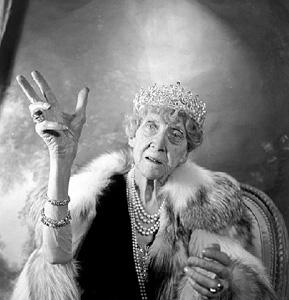 Sometimes a life story, regardless of how interesting, can be lost to the sands of time. And so it is with Princess Marie Louise, granddaughter of Queen Victoria.
Princess Marie Louise of Schleswig-Holstein was born on August 12, 1872, at Cumberland Lodge, the fourth child and younger daughter of Princess Helena and her husband Prince Christian of Schleswig-Holstein. She was christened Francisca Josepha Louise Augusta Marie Helene Christina. At first the family called her Louise, but later she chose to be known as Marie Louise. Her nickname in the family was 'Cousin Louie'.
On July 6, 1891 she married Prince Aribert of Anhalt but the marriage was unhappy and childless. For her husband the marriage had been one of convenience. She later wrote "As time went on, I became increasingly aware that my husband and I were drifting further and further apart. I had no share in his life" In 1900 her father-in-law, without warning, used his power as sovereign Prince Anhalt to annul the marriage, against her wishes. However, the Princess regarded her marriage vows as binding and never remarried. Of Princess Helena and Prince Christian's five children (one died in infancy), Marie Louise would be the only one to marry.
After her marriage ended she moved in with her sister, Helena Victoria, with whom she spent the last long years of her life in perfect contentment. Thereafter she devoted herself to charitable works, and patronage of the arts, especially music; she was also an intrepid traveller. Her greatest legacy will probably be her work in creating Queen Mary's dolls' house. Conceived as a gift for Queen Mary, this project was her inspiration and she was deeply involved in its creation.
In 1917, when members of the British Royal family relinquished all non-British titles, she ceased to be a Princess of Schleswig-Holstein. Although she was never formally given the title Princess of Great Britain and Ireland, King George V granted her the title of Her Highness Princess Marie Louise.
She was over eighty when, in 1953, she sat for Cecil Beaton, the famed photographer. He began by assuming that she must be 'an old gaga absurdity,' but by the end of the session he thought her 'absolutely enchanting.' She attended the coronations of four sovereigns, Edward VII, George V, George VI and Elizabeth II. In November 1956 she published her memoirs, My Memories Of Six Reigns. She died in London a month later and is buried in the Frogmore burial grounds, Windsor.
© Marilyn Braun 2005
Friday, September 09, 2005
Royal Profile: Sophie, Countess of Wessex
When she was younger she was once described as "someone you wouldn't notice in a crowd," this view has most certainly changed now that she is a member of the royal family. Sophie Helen, Countess of Wessex, the former Sophie Rhys Jones, was born on January 20, 1965. Her first name was chosen by chance, when her mother was pregnant she overheard another mother call out "Sophie!" to her little girl and decided that she liked the name. Her second name, Helen, comes from her father's sister who died in a riding accident 10 years before she was born.
She is the second child and only daughter of Christopher Bournes Rhys-Jones, a retired tire salesman, and his wife, the late Mary O'Sullivan. She has an older brother named David. Her family moved to Kent and she started her education at Dulwich College Preparatory School. She then attended Kent College School for girls, before completing her education at West Kent College.
As a child she dreamed of being a ballerina and she took lessons until she was seventeen. When she was a teenager she joined the Cranbrook Operatic Society and during the audition she has to sing solo in front of a critical producer; 'It was,' she remembers, 'the worst moment of my life,' Although her voice was 'rather shaky,' her dancing and acting skills were not and she was offered a part in the chorus of My Fair Lady.
At the age of nineteen she moved to London and embarked on a career in Public Relations. In 1996 she opened her own PR firm, RJH Public Relations, which she worked at until 2002. Although no longer involved in the day- to-day aspects she still retains a small business connection.
Edward and Sophie met in 1993, purely by chance and they were able to pursue their relationship largely away from the public eye until Andrew Morton entered her office, walked to her desk and said: "Sophie Rhys-Jones, can I be the first person to call you Your Royal Highness?" After a five-year courtship, the engagement of Sophie to Prince Edward was announced in January 1999. They were married on June 19 of the same year at St. George's Chapel, Windsor. It was the last royal wedding of the millennium.
On November 8, 2003 the couple welcomed their first child, The Lady Louise Windsor. As a granddaughter of the sovereign in the male line, she is entitled to be called Her Royal Highness Princess Louise of Wessex. However, at the time of her parents marriage, it was decided that any children would not use HRH Prince/Princess but would carry courtesy titles as the children of an Earl. This was so they could avoid the full burden of royal titles and the responsiblity that comes with them.
The Countess of Wessex's hobbies and interests include skiing, horse-riding, carriage driving, sailing and gardening. She is patron of over 40 charities and organizations and occasionally accompanies her husband on engagements, traveling with him to various parts of the world in support of The Duke of Edinburgh International Awards Foundation. She also holds honorary military appointments as Colonel in Chief, Queen Alexandra's Royal Army Nursing Corps and Colonel in Chief, The Lincoln and Welland Regiment.
The couple live at Bagshot Park, Surrey.
© Marilyn Braun 2005
She is the second child and only daughter of Christopher Bournes Rhys-Jones, a retired tire salesman, and his wife, the late Mary O'Sullivan. She has an older brother named David. Her family moved to Kent and she started her education at Dulwich College Preparatory School. She then attended Kent College School for girls, before completing her education at West Kent College.
As a child she dreamed of being a ballerina and she took lessons until she was seventeen. When she was a teenager she joined the Cranbrook Operatic Society and during the audition she has to sing solo in front of a critical producer; 'It was,' she remembers, 'the worst moment of my life,' Although her voice was 'rather shaky,' her dancing and acting skills were not and she was offered a part in the chorus of My Fair Lady.
At the age of nineteen she moved to London and embarked on a career in Public Relations. In 1996 she opened her own PR firm, RJH Public Relations, which she worked at until 2002. Although no longer involved in the day- to-day aspects she still retains a small business connection.
Edward and Sophie met in 1993, purely by chance and they were able to pursue their relationship largely away from the public eye until Andrew Morton entered her office, walked to her desk and said: "Sophie Rhys-Jones, can I be the first person to call you Your Royal Highness?" After a five-year courtship, the engagement of Sophie to Prince Edward was announced in January 1999. They were married on June 19 of the same year at St. George's Chapel, Windsor. It was the last royal wedding of the millennium.
On November 8, 2003 the couple welcomed their first child, The Lady Louise Windsor. As a granddaughter of the sovereign in the male line, she is entitled to be called Her Royal Highness Princess Louise of Wessex. However, at the time of her parents marriage, it was decided that any children would not use HRH Prince/Princess but would carry courtesy titles as the children of an Earl. This was so they could avoid the full burden of royal titles and the responsiblity that comes with them.
The Countess of Wessex's hobbies and interests include skiing, horse-riding, carriage driving, sailing and gardening. She is patron of over 40 charities and organizations and occasionally accompanies her husband on engagements, traveling with him to various parts of the world in support of The Duke of Edinburgh International Awards Foundation. She also holds honorary military appointments as Colonel in Chief, Queen Alexandra's Royal Army Nursing Corps and Colonel in Chief, The Lincoln and Welland Regiment.
The couple live at Bagshot Park, Surrey.
© Marilyn Braun 2005
Wednesday, September 07, 2005
Green Eyes and Jam
Finally, a member of the royal family has done something to write about! Thank god for undercover reporters who dress up as sheikhs to get minor royals to make controversial comments. He has entrapped a royal before, Sophie, the Countess of Wessex, was his first unwitting victim. However, her indiscretions just pale in comparison to the revelations of Princess Michael of Kent.
Of all of the comments she has made, this one just has gone too far. After all of these years, does she still need to go for the jugular? Send yet another royal into a seething rage? You may now wonder, what she has she done this time?
She criticized Prince Charles' jam. Now it's personal.
Out of the many things I have done, there is one thing I would never do; dis someone's preserves. No matter how questionable something tastes or is made, you should never take it to a public forum and broadcast it to the world. Not only is it bad manners it's also not appropriate; let other people find out for themselves.
I don't want to rush to any judgement; to be fair I haven't tried either person's jam. Mainly because I probably couldn't afford it and also because I have plenty of homemade jam in my pantry. Although I'm not a huge fan of raspberries, if I did decide to choose between the two, in a blindfolded taste test I would probably go with the more homemade one. No doubt made with the loving care of underpaid servants. However, I might be lured by the feeling of the label to think that it's better quality; see here for yourself, doesn't it make your mouth water? http://www.duchyoriginals.com/preserves_raspberry.htm
I don't see what the problem is; don't we all make snippy comments about our relatives when they've stayed too long at our house? Aren't we all offered homemade jam that we end up passing on to other people? Those ubiquitous 'sources' say that Prince Charles is 'furious' and will confront the Princess. I would buy tickets to that dressing down. Maybe he'll send her packing with a lifetime supply, that would fix her!
Until I started this blog I never really paid much attention to Princess Michael (wife of Prince Michael of Kent). While the other royals are behaving themselves, I appreciate her so much more. After all I can't keep writing informative royal profiles forever now can I?
This is not the first time she's made disparaging comments towards her family, so it's no surprise. We will never understand 'Princess Pushys' motives; is she naturally malicious? Green with envy? Misunderstood? Or just brutally honest?
One thing is for certain, she's always entertaining.
© Marilyn Braun 2005
Of all of the comments she has made, this one just has gone too far. After all of these years, does she still need to go for the jugular? Send yet another royal into a seething rage? You may now wonder, what she has she done this time?
She criticized Prince Charles' jam. Now it's personal.
Out of the many things I have done, there is one thing I would never do; dis someone's preserves. No matter how questionable something tastes or is made, you should never take it to a public forum and broadcast it to the world. Not only is it bad manners it's also not appropriate; let other people find out for themselves.
I don't want to rush to any judgement; to be fair I haven't tried either person's jam. Mainly because I probably couldn't afford it and also because I have plenty of homemade jam in my pantry. Although I'm not a huge fan of raspberries, if I did decide to choose between the two, in a blindfolded taste test I would probably go with the more homemade one. No doubt made with the loving care of underpaid servants. However, I might be lured by the feeling of the label to think that it's better quality; see here for yourself, doesn't it make your mouth water? http://www.duchyoriginals.com/preserves_raspberry.htm
I don't see what the problem is; don't we all make snippy comments about our relatives when they've stayed too long at our house? Aren't we all offered homemade jam that we end up passing on to other people? Those ubiquitous 'sources' say that Prince Charles is 'furious' and will confront the Princess. I would buy tickets to that dressing down. Maybe he'll send her packing with a lifetime supply, that would fix her!
Until I started this blog I never really paid much attention to Princess Michael (wife of Prince Michael of Kent). While the other royals are behaving themselves, I appreciate her so much more. After all I can't keep writing informative royal profiles forever now can I?
This is not the first time she's made disparaging comments towards her family, so it's no surprise. We will never understand 'Princess Pushys' motives; is she naturally malicious? Green with envy? Misunderstood? Or just brutally honest?
One thing is for certain, she's always entertaining.
© Marilyn Braun 2005
Tuesday, September 06, 2005
Royal Profile: Princess Alice, Countess of Athlone
At the time of her death Princess Alice Mary Victoria Augusta Pauline was the oldest ever member of the royal family, the longest lived princess of the blood royal, and she has the distinction of being the longest surviving grandchild of Queen Victoria. She was born on February 25, 1883 at Windsor Castle, the daughter of Queen Victoria's youngest son, Prince Leopold, Duke of Albany, and his wife, Helen, the Duchess of Albany. Her father had haemophilia and died when Alice was a little over a year old. She had one brother, Charles Edward, who was born four months after their father had died.
In February 1904 Princess Alice married His Serene Highness Prince Alexander of Teck, brother of Queen Mary. After her marriage she was known as HRH Princess Alexander of Teck. They had three children: May, Rupert and Maurice, who died while still an infant. Princess Alice inherited the haemophilia gene from her father and her eldest son Rupert suffered from it, eventually dying at age 21. In 1917 Prince Alexander gave up his German name and titles and was created Viscount Tremation and Earl of Athlone, adopting the name Cambridge. Princess Alice, however, was a princess of Great Britain and Ireland and a Royal Highness in her own right, and from 1917 until her death she was known as Princess Alice, Countess of Athlone.
Princess Alice was active in war work from 1914 to 1918 and later lived in South Africa and Canada during her husband's terms as Governor-General of each country. She was an expert gardener and during her husband's tenure in Ottawa, she designed and helped to build rock gardens. She overcame the restrictions of short summers and extreme winters by keeping five hothouses running in order to produce beautiful plants and flowers. Princess Alice was Honorary Commandant of the Women's Royal Canadian Naval Service, Honorary Air Commandant of the Royal Canadian Air Force (Women's Division), and president of the nursing division of the St. John's Ambulance Brigade.
After her husband's death in 1957 she lived in their home in Kensington Palace. During her lifetime she carried out many royal duties and she attended the coronations of four monarchs: Edward VII, George V, George VI and Elizabeth II. Her pastimes included needlework, gardening and reading and in 1966 she published her memoirs, For My Grandchildren, giving an inside view of Queen Victoria and her family.
She died in January 1981, aged 97 years, 10 months and 9 days. She is buried beside her husband in the Frogmore burial grounds, Windsor.
© Marilyn Braun 2005
In February 1904 Princess Alice married His Serene Highness Prince Alexander of Teck, brother of Queen Mary. After her marriage she was known as HRH Princess Alexander of Teck. They had three children: May, Rupert and Maurice, who died while still an infant. Princess Alice inherited the haemophilia gene from her father and her eldest son Rupert suffered from it, eventually dying at age 21. In 1917 Prince Alexander gave up his German name and titles and was created Viscount Tremation and Earl of Athlone, adopting the name Cambridge. Princess Alice, however, was a princess of Great Britain and Ireland and a Royal Highness in her own right, and from 1917 until her death she was known as Princess Alice, Countess of Athlone.
Princess Alice was active in war work from 1914 to 1918 and later lived in South Africa and Canada during her husband's terms as Governor-General of each country. She was an expert gardener and during her husband's tenure in Ottawa, she designed and helped to build rock gardens. She overcame the restrictions of short summers and extreme winters by keeping five hothouses running in order to produce beautiful plants and flowers. Princess Alice was Honorary Commandant of the Women's Royal Canadian Naval Service, Honorary Air Commandant of the Royal Canadian Air Force (Women's Division), and president of the nursing division of the St. John's Ambulance Brigade.
After her husband's death in 1957 she lived in their home in Kensington Palace. During her lifetime she carried out many royal duties and she attended the coronations of four monarchs: Edward VII, George V, George VI and Elizabeth II. Her pastimes included needlework, gardening and reading and in 1966 she published her memoirs, For My Grandchildren, giving an inside view of Queen Victoria and her family.
She died in January 1981, aged 97 years, 10 months and 9 days. She is buried beside her husband in the Frogmore burial grounds, Windsor.
© Marilyn Braun 2005
Wednesday, August 31, 2005
Lest we forget Diana
 |
| Author's collection |
Now that I've reminded you of this, you probably fall into one of these categories:
- You're completely indifferent
- You believe her death was a tragic accident
- You believe that her death was a conspiracy of impressive, strategic proportions - a mission that switched gears effortlessly upon the whim of it's targets - and you won't rest until the truth is revealed.
- You're undecided, weighing the pros and cons of the investigation, not jumping to any conclusions until all of the evidence has been reviewed.
Regardless of how you feel, it's okay to admit it. Beneath the layer of fashionable denial, you know the truth. Personally my feelings vacillate on any given anniversary of her death. Here is my progression:
- On the 1st anniversary I was disappointed there wasn't more coverage
- On the 2nd, I was further disappointed but realized that yes, life does go on
- on the 3rd, I almost forgot but then I looked at the calendar
- on the 4th, and 5th I don't remember what I did
- On the 6th, I made my pilgrimage to Althorp to visit her grave, buy souvenirs, and to say I'd done it
- On the 7th, I don't remember what I did
- On the 8th, I'm writing this article
© Marilyn Braun 2005
Sunday, August 28, 2005
Royal Profile: David Linley
David Linley could arguably be considered the most successful royal of his generation. Unlike some of his cousins who are expected to perform royal duties, he has created his own successful business, by his own effort, talent, and on his own terms.
David Albert Charles Armstrong-Jones, Viscount Linley of Nymans, was born on November 3, 1961 at Clarence House. His parents were the late Princess Margaret, sister of the Queen, and Antony Armstrong-Jones, Lord Snowdon. He has a younger sister, Lady Sarah Chatto (nee Armstrong-Jones) born in 1964. He also has two half-siblings, Lady Frances Armstrong-Jones, born in 1979 and Jasper William Oliver Cable-Alexander, born in 1998.
He bears a striking resemblance to his father, the renowned photographer who goes by the name Snowdon, and he has taken after him by pursuing an artistic career. Although he and his sister grew up within the shadow of Buckingham Palace, unlike their cousins, they enjoyed comparative freedom from the press and public eye. Princess Margaret said of them: 'my children are not royal, they just happen to have the Queen for an aunt.' David's parents separated in 1976 and after the divorce, custody was given to Princess Margaret. However, both children were on equally good terms with both parents.
At first David was educated, along with his cousins at the schoolroom in Buckingham Palace. He went on to a London day school and then a preparatory school. He did not distinguish himself academically and along with his sister, was then sent to a progressive co-educational school, Bedales in Hampshire. David excelled at school in art and woodworking and he went on to the John Makepeace School for Craftsmen in Dorset. He made his cousin Prince Charles, a dining-room table as a wedding present in 1981. In 1982, he and a partner set up their own cabinet-making business. Within three years he had proved successful enough to open a shop, David Linley Furniture Limited now known as Linley. Today, he is a manufacturer of furniture, upholstery and interior design products. He also opened a restaurant called Deals and within a few years he opened a second restaurant. He has written three books and lectured around the world at various prestigious venues.
In 1993 he married the Honourable Serena Stanhope, daughter of a wealthy landowner. They have two children - the Honourable Charles Armstrong-Jones born in 1999, and the Honourable Margarita Armstrong-Jones born in 2002.
© Marilyn Braun 2005
David Albert Charles Armstrong-Jones, Viscount Linley of Nymans, was born on November 3, 1961 at Clarence House. His parents were the late Princess Margaret, sister of the Queen, and Antony Armstrong-Jones, Lord Snowdon. He has a younger sister, Lady Sarah Chatto (nee Armstrong-Jones) born in 1964. He also has two half-siblings, Lady Frances Armstrong-Jones, born in 1979 and Jasper William Oliver Cable-Alexander, born in 1998.
He bears a striking resemblance to his father, the renowned photographer who goes by the name Snowdon, and he has taken after him by pursuing an artistic career. Although he and his sister grew up within the shadow of Buckingham Palace, unlike their cousins, they enjoyed comparative freedom from the press and public eye. Princess Margaret said of them: 'my children are not royal, they just happen to have the Queen for an aunt.' David's parents separated in 1976 and after the divorce, custody was given to Princess Margaret. However, both children were on equally good terms with both parents.
At first David was educated, along with his cousins at the schoolroom in Buckingham Palace. He went on to a London day school and then a preparatory school. He did not distinguish himself academically and along with his sister, was then sent to a progressive co-educational school, Bedales in Hampshire. David excelled at school in art and woodworking and he went on to the John Makepeace School for Craftsmen in Dorset. He made his cousin Prince Charles, a dining-room table as a wedding present in 1981. In 1982, he and a partner set up their own cabinet-making business. Within three years he had proved successful enough to open a shop, David Linley Furniture Limited now known as Linley. Today, he is a manufacturer of furniture, upholstery and interior design products. He also opened a restaurant called Deals and within a few years he opened a second restaurant. He has written three books and lectured around the world at various prestigious venues.
In 1993 he married the Honourable Serena Stanhope, daughter of a wealthy landowner. They have two children - the Honourable Charles Armstrong-Jones born in 1999, and the Honourable Margarita Armstrong-Jones born in 2002.
© Marilyn Braun 2005
Friday, August 26, 2005
Royal Profile: Prince Michael of Kent
One of the guests living with the family at the time noted that 'the Duke seems to love this tiny infant. Every evening, he leaves the table shortly after ten o'clock and carries his youngest son to the nursery and lays him in his cot and stands watching and watching. Nannie told me that each night she discreetly leaves the room, but she can hear the Duke talking softly to him. Perhaps he is unconsciously preparing him for the future.'
Seven weeks after his birth, his father was killed in a plane crash while on active service. After his father's death, his mother raised him, his brother - Edward, the current Duke of Kent and sister, Princess Alexandra, quietly at Coppins.
Like his father, cars and anything mechanical fascinated him. He showed an interest in geography and he was musical, playing the tambourine in the school percussion band. His childhood ambition, however, was to join the fire brigade. In 1951 he was sent to Sunningdale preparatory school, and in 1955 he entered Eton. From there he entered the Army and went to Sandhurst, the Royal Military Academy in 1961.
During his time in the Army he proved himself to be an able linguist. In 1966 he became the first member of the Royal Family to learn Russian and he qualified as a Russian Military interpreter. He joined the Ministry of Defence in 1968, looking after Foreign Defence Attaches in London. He was part of the United Nations Force in Cyprus in 1971, and from 1974-1981 worked in the Ministry of Defence, in the Defence Intelligence Service. Eventually he attained the rank of Major in the Royal Hussars. He has most recently been promoted to Honorary Rear Admiral in the Royal Naval Reserve.
When he retired from the Army in 1981, he began to work full time and he has served on the boards of various companies. In his day-to-day business, he is chairman of his own private consultancy company. Due to his work, the Prince travels extensively on business and has led delegations of British businessmen to China as well as Russia.
Although he acted as a page at the wedding of his cousins, Princess Elizabeth (now the Queen) to Prince Philip in 1947, he does not take part in royal events very often. Unlike his siblings, he does not receive a parliamentary allowance and it was clear from the beginning, and as the second son of a Duke, that he was one royal who would have to earn his own living. However, he has represented The Queen on a number of occasions, including at the State funerals of the Presidents of India and Cyprus in 1977, the signing of the Treaty of Friendship with Brunei in 1979, the Independence Day celebrations in Belize in 1981, and most recently in 2004, for the 150th Anniversary of the Crimean War in the Ukraine. He also regularly attends charity functions.
Prince Michael attracted a lot of publicity when in June 1978 he married Baroness Marie-Christine von Reibnitz, a Catholic and a divorcee. The marriage, although finally approved by the Queen, required him to relinquish his place in the line of succession to the throne, and at first the Catholic Church, because of Princess Michael’s divorce, did not recognize it. As such they could not marry in the church and they had a civil ceremony instead. The Princess was granted an annulment of her first marriage and in 1983 the Pope gave them permission to marry in the Roman Catholic rite; the ceremony took place in the Cardinal's private chapel, Westminister Cathedral. The couple have two children, Lord Frederick Windsor, born in 1979 and Lady Gabriella Windsor, born 1981. Both have been raised in the Church of England and are therefore still eligible to succeed.
A keen sportsman, he enjoys rowing, hunting and squash. He has also represented Great Britain as a bobsleigh driver and was a reserve for the 1972 Olympics. He is a vintage car enthusiast, a competitive rally driver, and he is also a qualified pilot of both fixed wing aircraft and helicopters.
At present Prince Michael and his family live in Kensington Palace.
© Marilyn Braun 2005
Wednesday, August 24, 2005
Royal Profile: The Princess Royal
On a regular basis I will profile a member of the royal family, past or present, which may not necessarily receive as much notice as the higher profile, glamorous, members. Despite her hard work and tireless efforts, Princess Anne could certainly fit into that description. In the past her caustic attitude, mainly towards the media, has overshadowed her charity work. However, as the years have passed, some now regard her as the monarchy's most valuable asset, after the Queen.
Princess Anne Elizabeth Alice Louise was born on August 15, 1950 at Clarence House. On the day of her birth, her father, Philip, Duke of Edinburgh, was promoted to Lieutenant Commander in the Royal Navy. At the time, her mother was Princess Elizabeth, Duchess of Edinburgh and heiress presumptive to the throne.
When she was 18 months old, her mother became Queen and the family moved to Buckingham Palace. Here she grew up with her older brother, Prince Charles, now the Prince of Wales. The popular images of her as a child show a little girl with blonde curls, blue eyes and gentle looks that belied the reality she was a tomboy, preferring to climb trees than playing with dolls. As she grew older, although the public expected it, she could not fill the role of fairytale princess, preferring to maintain her individuality and regarding clothes as simply a requirement to her position.
She was educated first at home in the palace, then at the age of thirteen she was sent to a girl's boarding school, Benenden, in Kent. She started official duties when she was 18 years old and in 1969 joined her parent in Austria for her first State visit.
At the age of two she was taught to ride by her mother and horses have played a very important part of her life. Through her own ability she is internationally known as an accomplished sportswoman. She herself has admitted, 'It's the one thing I can do well and can be seen to do well.' As a teenager she started to complete in show jumping and dressage events. She has won a number of trophies for her skill as a horsewoman, including the Individual Woman's European Championship in 1971. In 1973 she competed in the European Championships in Kiev and again in West Germany in 1975, where she won silver medals both as an individual and as a member of the British team. She competed in the 1976 Olympics in Montreal on Great Britain's riding team.
In 1973 she married Captain Mark Philips in Westminster Abbey. They had two children, Peter in 1977 and Zara in 1981. In her desire for them to have as normal a life as possible, neither of her children holds royal titles. Her marriage to Captain Mark Philips ended in 1992 and she married Commander Timothy Laurence the same year.
In June 1987 she received the title of Princess Royal from the Queen. She is the seventh holder of this title. In 1994 The Queen appointed The Princess a Lady of the Most Noble Order of the Garter and in 2000, in recognition of her work for charities and to mark her 50th birthday, she was appointed to the Order of the Thistle.
In 2004 the Princess Royal carried out some 599 engagements both in the UK and overseas. She has visited over 70 countries. Much of her travel abroad has been in her capacity as President of Save the Children fund, of which she has been president since 1970. She is associated with over 200 organizations in an official capacity and she also holds honorary rank and appointments in a number of regiments of the Armed Services.
Princess Anne has garnered a few 'firsts'; along with being the first daughter of a Sovereign to attend boarding school, she is also the first to compete in the Olympics, and the first member of the royal family since King Charles I (for treason), to face criminal charges. Her charges, however, were much less serious; speeding and a fine for when her dog attacked two children.
© Marilyn Braun 2005
Princess Anne Elizabeth Alice Louise was born on August 15, 1950 at Clarence House. On the day of her birth, her father, Philip, Duke of Edinburgh, was promoted to Lieutenant Commander in the Royal Navy. At the time, her mother was Princess Elizabeth, Duchess of Edinburgh and heiress presumptive to the throne.
When she was 18 months old, her mother became Queen and the family moved to Buckingham Palace. Here she grew up with her older brother, Prince Charles, now the Prince of Wales. The popular images of her as a child show a little girl with blonde curls, blue eyes and gentle looks that belied the reality she was a tomboy, preferring to climb trees than playing with dolls. As she grew older, although the public expected it, she could not fill the role of fairytale princess, preferring to maintain her individuality and regarding clothes as simply a requirement to her position.
She was educated first at home in the palace, then at the age of thirteen she was sent to a girl's boarding school, Benenden, in Kent. She started official duties when she was 18 years old and in 1969 joined her parent in Austria for her first State visit.
At the age of two she was taught to ride by her mother and horses have played a very important part of her life. Through her own ability she is internationally known as an accomplished sportswoman. She herself has admitted, 'It's the one thing I can do well and can be seen to do well.' As a teenager she started to complete in show jumping and dressage events. She has won a number of trophies for her skill as a horsewoman, including the Individual Woman's European Championship in 1971. In 1973 she competed in the European Championships in Kiev and again in West Germany in 1975, where she won silver medals both as an individual and as a member of the British team. She competed in the 1976 Olympics in Montreal on Great Britain's riding team.
In 1973 she married Captain Mark Philips in Westminster Abbey. They had two children, Peter in 1977 and Zara in 1981. In her desire for them to have as normal a life as possible, neither of her children holds royal titles. Her marriage to Captain Mark Philips ended in 1992 and she married Commander Timothy Laurence the same year.
In June 1987 she received the title of Princess Royal from the Queen. She is the seventh holder of this title. In 1994 The Queen appointed The Princess a Lady of the Most Noble Order of the Garter and in 2000, in recognition of her work for charities and to mark her 50th birthday, she was appointed to the Order of the Thistle.
In 2004 the Princess Royal carried out some 599 engagements both in the UK and overseas. She has visited over 70 countries. Much of her travel abroad has been in her capacity as President of Save the Children fund, of which she has been president since 1970. She is associated with over 200 organizations in an official capacity and she also holds honorary rank and appointments in a number of regiments of the Armed Services.
Princess Anne has garnered a few 'firsts'; along with being the first daughter of a Sovereign to attend boarding school, she is also the first to compete in the Olympics, and the first member of the royal family since King Charles I (for treason), to face criminal charges. Her charges, however, were much less serious; speeding and a fine for when her dog attacked two children.
© Marilyn Braun 2005
Wednesday, August 17, 2005
Here comes the bride..
The hunt for a bride for Prince William has begun! The top contender at the moment seems to be his present girlfriend, Kate Middleton. They seem so happy and so young and so in love and depending on which report you read they plan on getting married. Despite all of the speculation, one must note that William is only 23 years old; merely a pup, and he no doubt would like to 'sow his wild oats'. So, I'm sure we will see a bevy of lovely ladies photographed in close proximity to him, whether he wants them in the frame or not. We will never know the true status of the relationship as royal prince's are not usually photographed touching their girlfriend, so the first we are likely to know about an engagement is when it's announced.
When the time comes for him to choose a wife to bear his children, she will probably be from the upper classes, wealthy, aristocratic and well bred. The options for marrying in his status level are limited. Unlike the good old interbred days, royalty no longer seems to marry royalty. Today people would gasp in horror if he took off with his cousin, Lady Gabriella Windsor, gorgeous as she is. So should things not work out with Kate, I have compiled a list of potential candidates. In no particular order:
Britney Spears - just thought I'd throw her in there since they supposedly emailed each other. Unfortunately, now that she's married, she out of the running. Of course if she happens to be divorced by the time William seriously considers settling down, she may once again be a consideration. Princess Britney does have a nice Barbie doll ring to it.
Christina Aguilera - her version of God Save the Queen would blow the corgis right out of the room
Mary Kate or Ashley Oslen - Maybe they could sub for each other when they're ill. When Prince William does walkabouts he would have one for each side of the street.
Hillary Duff - Didn't she recently play a princess in a movie? What better preparation than that? A modern day Grace Kelly with her own clothing line.
Princess Theodora of Greece - not a bad looking girl and already familiar with the ins and outs of royalty.
Princess Madeleine of Sweden - Beautiful girl, maybe too beautiful. They would be so dazzling together we wouldn't know whom to look at.
Crown Princess Victoria of Sweden - the royal power couple of the century.
Charlotte Casiraghi - daughter of Princess Caroline of Monaco. Beautiful but Catholic. Maybe she would consider converting to the Church of England for him.
Princess Leia - He might even get his own action figure.
Chelsy Davy - Prince Harry's girlfriend. The royals do have a precedent of a bride marrying the brother when her fiancé unexpectedly dies.
For versatility, this list can also be used should something unfortunate happen to Prince William. Just change out Chelsy Davy's name with Kate Middleton's.
© Marilyn Braun 2005
Wednesday, August 10, 2005
The Makeover of Camilla
Seeing recent photos of Camilla, I have to say I'm speechless. Once again, the transformation of Camilla is striking; she looks lovelier the more I see of her. For her birthday she was granted her own coat of arms. Search online and you will even find Camilla impersonators; the ultimate compliment. You know you've made it when you have an impersonator. The unflattering photos, clothes, and the rotweiler comments are now history.
We are no longer throwing bread rolls at her; we are breaking bread with her.
But regardless of how she looks, the fact remains is that the royal family needed Camilla. Would we really be paying attention to Charles' engagements if it weren't for her? Instead of being threatened by the attention on his wife, maybe Charles now realizes her value. President John F. Kennedy realized and even acknowledged it: "I am the man who accompanied Jacqueline Kennedy to Paris, and I have enjoyed it". *Sigh* if only Charles had taken this attitude during his marriage to Diana. Had there been no Camilla, the stamps and souvenirs for Charles' coronation would have looked slightly off. Do we really want a commemorative mug with Charles' mug on it? At the time of his mother's coronation, she had the advantage of youth to hold her own on the china. If the handsome Prince Philip appeared with her it was even better. Charles doesn't have that, if he ever did. Camilla, like Diana, generates an interest, a "what is she going to wear" curiosity. Still finding her legs as the newest recruit, Camilla has a down to earth quality that people seem to like and appreciate.
The makeover of Camilla did not happen overnight. From 1999, when she made her first public appearance with the Prince of Wales to the present, it occurred gradually, under the radar, while people were distracted by the comparisons to Diana. It was complete by the time their engagement was announced. Now she is being complimented and lauded for her fashion sense and naturalness. Camilla positively glowed with happiness and I admit that until the wedding, that was the most beautiful I'd ever seen her.
It really is too bad that it took so long for people to notice. Seeing photos of Camilla in her debutante phase she was a very pleasant looking young woman; not particularly remarkable but attractive in her own way. Now as the wife of the heir to the throne, she is regarded differently. She did not have the benefit, like Diana did, of having youth on her side or the lack of a 'past', a Cinderella story in real life. But before she became a princess, Diana herself could not have been considered to be classically beautiful. She was attractive in a dewy, youthful kind of way, but there was no indication of just how glamorous she would become. In his bachelor days Prince Charles seemed to have a preference for gorgeous blondes and Diana simply didn't fill that mould when she appeared on the scene as a gauche 19 year old. The media helped make her beautiful before we and even she believed it.
Renowned for her beauty, her glamour and royal wife or not, Diana would have fought off the inevitable aging process with all of the botox ammunition at her disposal. According to her brother, turning 40 would have been traumatic for her. She too would have made her 40's and beyond look great, but at the cost of high maintenance. Now Camilla, stepping on to the world stage in her fifties, has the advantage. No retrospective of youthful photos to live up to. She doesn't need to hide her wrinkles; she's earned them. Broken in, so to speak, she appeals to the mature demographic of women once relegated to ads for Geritol, Freedom 55, and anti-wrinkle serum. She isn't a threat and she makes being (almost) 60 look great. One has to wonder though, if Diana were still alive, would we be saying all of this good stuff? Clarence House regards Camilla as a trump card with the potential to fill the Queen Mother's vacant pumps. Probably a relief to Camilla, and already half way there age wise.
We do have double standards for women - in our youth we are prized for our looks but once we get older we are not prized for our experience. This article isn't meant to go into those details but I think that's particularly true in Camilla's case. People wonder what Charles could possibly see in Camilla, how he could have traded Diana in for an 'older model'. In our own cases would we be able to stand up to such minute scrutiny? I'm sure we're far less kind to ourselves when we look in the mirror. Once again, she could appeal to the women out there comfortable in their own skin; Princess Everywoman. But makeover or not, eventually we will see the formal airbrushed photo of her wearing the tiara, priceless jewels and full evening gown. It's only a matter of time.
© Marilyn Braun 2005
We are no longer throwing bread rolls at her; we are breaking bread with her.
But regardless of how she looks, the fact remains is that the royal family needed Camilla. Would we really be paying attention to Charles' engagements if it weren't for her? Instead of being threatened by the attention on his wife, maybe Charles now realizes her value. President John F. Kennedy realized and even acknowledged it: "I am the man who accompanied Jacqueline Kennedy to Paris, and I have enjoyed it". *Sigh* if only Charles had taken this attitude during his marriage to Diana. Had there been no Camilla, the stamps and souvenirs for Charles' coronation would have looked slightly off. Do we really want a commemorative mug with Charles' mug on it? At the time of his mother's coronation, she had the advantage of youth to hold her own on the china. If the handsome Prince Philip appeared with her it was even better. Charles doesn't have that, if he ever did. Camilla, like Diana, generates an interest, a "what is she going to wear" curiosity. Still finding her legs as the newest recruit, Camilla has a down to earth quality that people seem to like and appreciate.
The makeover of Camilla did not happen overnight. From 1999, when she made her first public appearance with the Prince of Wales to the present, it occurred gradually, under the radar, while people were distracted by the comparisons to Diana. It was complete by the time their engagement was announced. Now she is being complimented and lauded for her fashion sense and naturalness. Camilla positively glowed with happiness and I admit that until the wedding, that was the most beautiful I'd ever seen her.
It really is too bad that it took so long for people to notice. Seeing photos of Camilla in her debutante phase she was a very pleasant looking young woman; not particularly remarkable but attractive in her own way. Now as the wife of the heir to the throne, she is regarded differently. She did not have the benefit, like Diana did, of having youth on her side or the lack of a 'past', a Cinderella story in real life. But before she became a princess, Diana herself could not have been considered to be classically beautiful. She was attractive in a dewy, youthful kind of way, but there was no indication of just how glamorous she would become. In his bachelor days Prince Charles seemed to have a preference for gorgeous blondes and Diana simply didn't fill that mould when she appeared on the scene as a gauche 19 year old. The media helped make her beautiful before we and even she believed it.
Renowned for her beauty, her glamour and royal wife or not, Diana would have fought off the inevitable aging process with all of the botox ammunition at her disposal. According to her brother, turning 40 would have been traumatic for her. She too would have made her 40's and beyond look great, but at the cost of high maintenance. Now Camilla, stepping on to the world stage in her fifties, has the advantage. No retrospective of youthful photos to live up to. She doesn't need to hide her wrinkles; she's earned them. Broken in, so to speak, she appeals to the mature demographic of women once relegated to ads for Geritol, Freedom 55, and anti-wrinkle serum. She isn't a threat and she makes being (almost) 60 look great. One has to wonder though, if Diana were still alive, would we be saying all of this good stuff? Clarence House regards Camilla as a trump card with the potential to fill the Queen Mother's vacant pumps. Probably a relief to Camilla, and already half way there age wise.
We do have double standards for women - in our youth we are prized for our looks but once we get older we are not prized for our experience. This article isn't meant to go into those details but I think that's particularly true in Camilla's case. People wonder what Charles could possibly see in Camilla, how he could have traded Diana in for an 'older model'. In our own cases would we be able to stand up to such minute scrutiny? I'm sure we're far less kind to ourselves when we look in the mirror. Once again, she could appeal to the women out there comfortable in their own skin; Princess Everywoman. But makeover or not, eventually we will see the formal airbrushed photo of her wearing the tiara, priceless jewels and full evening gown. It's only a matter of time.
© Marilyn Braun 2005
Thursday, July 28, 2005
Royal Christenings
The purpose of a royal christening serves, much like the christenings everywhere, as an introduction of the child to the Church. In the case of an heir to the throne, the religious significance is, perhaps greater than usual as the British Monarch, is the head of the Church of England.
Like royal weddings, a royal christening is a joyous event, symbolizing the continuity of the monarchy. In 1982, Prince William was christened on his great-grandmother's 82nd birthday. Reminicent of an 1894 image of Queen Victoria, her son, her grandson and her great-grandson, the direct succession unquestionably secured. From that point, the image of four generations has occured with the births of Queen Alexandra's great-grandson, George Lascelles in 1923, the birth of Queen Mary's great-grandson, Prince Charles in 1948, and Queen Elizabeth's great-grandson, Prince William in 1982. If the Queen lives to see the birth of Prince William's child, she will be the first sovereign to see the direct succession secured into the fourth generation since Queen Victoria.
There are some traditions associated with royal christenings:
Christening Robe
Possibly the most well known image of a royal christening is the infant in the robe. Made for the christening of Queen Victoria's first child, Vicky - the Princess Royal in 1841, it is an heirloom that has been worn by generations of royal babies. In 1894 the robe was given by Queen Victoria to the Duchess of York (later Queen Mary), all of whose children were christened in it. In the next generation it was worn by the children of King George VI, of Prince Henry, Duke of Gloucester, and of Prince George, Duke of Kent. The children of The Queen and of Princess Margaret were christened in it, and it has subsequently been used for the christenings of all The Queens grandchildren and other Royal babies, including the grand children of Princess Margaret. This robe is made of fine Honiton lace lined with white satin, and like her wedding dress, chosen by the Queen to boost the lagging lace making trade, something that was very much appreciated at the time. As the robe is now 165 years old, it has become fragile, with the movement of various energetic babies. After each christening it is washed gently, wrapped in tissue paper, and placed in storage until the next event.
Usually, royal infants are christened within a few months of their birth, when the robe is more likely to fit. In 1990 Princess Eugenie, at 9 months old, wore the robe and the pictures show her to be very uncomfortable in it.
Venue
Royal Christenings have tended to take place away from the public eye as a private ceremony; no heads of state or other public dignitaries are invited. Princess Eugenie of York, daughter of Prince Andrew, Duke of York, was the first royal baby to have a public christening. This occured during morning service at St. Mary Magdalene, Sandringham, in December 1990. This church was also the setting for the christening of her great-grandfather, King George VI in February 1896.
Unlike royal weddings, the venue for christenings doesn't seem to follow any tradition or pattern, however in recent years the tendency has been towards Windsor, either in the private chapel or St. George's chapel. The most recent one was for Lady Louise Windsor, daughter of the Earl and Countess of Wessex. Several christenings have taken place at Windsor, including Edward VII, George V, Prince Harry and the Earl of Wessex himself.
Buckingham Palace has been the birthplace of many members of the royal family, and it has also been the setting of several christenings, mainly taking place in the Music room. The Queen's three eldest children were christened there, as was Prince Willliam. The Queen and Princess Margaret were christened in the private chapel of Buckingham Palace, which was destroyed during the Second World War. The Throne Room has also been used, namely for Queen Victoria's eldest child, the Princess Royal in 1841.
The Chapel Royal, at St. James' Palace is another popular setting, to name a few of the babies christened there: Lord Frederick Windsor in 1979, his sister Lady Gabriella Windsor in 1981, and Princess Beatrice of York in 1988.
Font and water from the River Jordan
The font used for a royal christening is the silver-gilt lily font, brought from Windsor for the occasion. This was designed by Prince Albert, for the christening of the Princess Royal, Queen Victoria's first born child. The child is christened with Holy water, from the River Jordan, a tradition that dates back to the Crusades.
Christian Names
Unlike most babies, the christening names bestowed on a royal baby tend to be longer and more numerous, culled from family tradition, flattery, and ancestors through the centuries. Queen Alexandra had 6 (Alexandra, Caroline, Marie, Charlotte, Louise, Julia), The Duke of Windsor had 7 (Edward, Albert, Christian, George, Andrew, Patrick, David), the last four paying tribute to the patron saints of England, Scotland, Ireland and Wales. His mother Queen Mary had 8 (Victoria, Mary, Augusta, Louise, Olga, Pauline, Claudine, Agnes). Now the amount of names given tends to be around 3 or 4. In Queen Victoria's time, she expected all of her descendants to bear either Victoria or Albert amongst their christian names. This 'tradition' ended with the birth of the present Queen, she was christened Elizabeth Alexandra Mary. A possible tempt of fate as these are also the names of three Queens.
Godparents
The list of godparents tends be more substantial as well as more illustrious, with royal and aristocratic choices. In the past the usual practice was to honor members of the family, however this has had it's drawbacks. Prince Charles had six godparents, three of whom were so old that they were unlikely to be of any value as mentors or sources of guidance. Today godparents for royal children tend to be contemporaries of the parents.
The Queen and Prince Charles have acted as godparents to numerous children. The Queen has over twenty godchildren, amongst them Charles Spencer, brother of Diana, Princess of Wales. Prince Charles is godfather to Camilla, Duchess of Cornwall's son, Tom Parker Bowles. Her former husband Andrew Parker Bowles is a godfather to Princess Anne's daughter Zara. The late Queen Mother was a godmother to Andrew Parker Bowles himself. It is interesting to note that when Diana, Princess of Wales was christened in 1961, out of the four Spencer children, she is the only one to have no royal godparents.
© Marilyn Braun 2005
Like royal weddings, a royal christening is a joyous event, symbolizing the continuity of the monarchy. In 1982, Prince William was christened on his great-grandmother's 82nd birthday. Reminicent of an 1894 image of Queen Victoria, her son, her grandson and her great-grandson, the direct succession unquestionably secured. From that point, the image of four generations has occured with the births of Queen Alexandra's great-grandson, George Lascelles in 1923, the birth of Queen Mary's great-grandson, Prince Charles in 1948, and Queen Elizabeth's great-grandson, Prince William in 1982. If the Queen lives to see the birth of Prince William's child, she will be the first sovereign to see the direct succession secured into the fourth generation since Queen Victoria.
There are some traditions associated with royal christenings:
Christening Robe
Possibly the most well known image of a royal christening is the infant in the robe. Made for the christening of Queen Victoria's first child, Vicky - the Princess Royal in 1841, it is an heirloom that has been worn by generations of royal babies. In 1894 the robe was given by Queen Victoria to the Duchess of York (later Queen Mary), all of whose children were christened in it. In the next generation it was worn by the children of King George VI, of Prince Henry, Duke of Gloucester, and of Prince George, Duke of Kent. The children of The Queen and of Princess Margaret were christened in it, and it has subsequently been used for the christenings of all The Queens grandchildren and other Royal babies, including the grand children of Princess Margaret. This robe is made of fine Honiton lace lined with white satin, and like her wedding dress, chosen by the Queen to boost the lagging lace making trade, something that was very much appreciated at the time. As the robe is now 165 years old, it has become fragile, with the movement of various energetic babies. After each christening it is washed gently, wrapped in tissue paper, and placed in storage until the next event.
Usually, royal infants are christened within a few months of their birth, when the robe is more likely to fit. In 1990 Princess Eugenie, at 9 months old, wore the robe and the pictures show her to be very uncomfortable in it.
Venue
Royal Christenings have tended to take place away from the public eye as a private ceremony; no heads of state or other public dignitaries are invited. Princess Eugenie of York, daughter of Prince Andrew, Duke of York, was the first royal baby to have a public christening. This occured during morning service at St. Mary Magdalene, Sandringham, in December 1990. This church was also the setting for the christening of her great-grandfather, King George VI in February 1896.
Unlike royal weddings, the venue for christenings doesn't seem to follow any tradition or pattern, however in recent years the tendency has been towards Windsor, either in the private chapel or St. George's chapel. The most recent one was for Lady Louise Windsor, daughter of the Earl and Countess of Wessex. Several christenings have taken place at Windsor, including Edward VII, George V, Prince Harry and the Earl of Wessex himself.
Buckingham Palace has been the birthplace of many members of the royal family, and it has also been the setting of several christenings, mainly taking place in the Music room. The Queen's three eldest children were christened there, as was Prince Willliam. The Queen and Princess Margaret were christened in the private chapel of Buckingham Palace, which was destroyed during the Second World War. The Throne Room has also been used, namely for Queen Victoria's eldest child, the Princess Royal in 1841.
The Chapel Royal, at St. James' Palace is another popular setting, to name a few of the babies christened there: Lord Frederick Windsor in 1979, his sister Lady Gabriella Windsor in 1981, and Princess Beatrice of York in 1988.
Font and water from the River Jordan
The font used for a royal christening is the silver-gilt lily font, brought from Windsor for the occasion. This was designed by Prince Albert, for the christening of the Princess Royal, Queen Victoria's first born child. The child is christened with Holy water, from the River Jordan, a tradition that dates back to the Crusades.
Christian Names
Unlike most babies, the christening names bestowed on a royal baby tend to be longer and more numerous, culled from family tradition, flattery, and ancestors through the centuries. Queen Alexandra had 6 (Alexandra, Caroline, Marie, Charlotte, Louise, Julia), The Duke of Windsor had 7 (Edward, Albert, Christian, George, Andrew, Patrick, David), the last four paying tribute to the patron saints of England, Scotland, Ireland and Wales. His mother Queen Mary had 8 (Victoria, Mary, Augusta, Louise, Olga, Pauline, Claudine, Agnes). Now the amount of names given tends to be around 3 or 4. In Queen Victoria's time, she expected all of her descendants to bear either Victoria or Albert amongst their christian names. This 'tradition' ended with the birth of the present Queen, she was christened Elizabeth Alexandra Mary. A possible tempt of fate as these are also the names of three Queens.
Godparents
The list of godparents tends be more substantial as well as more illustrious, with royal and aristocratic choices. In the past the usual practice was to honor members of the family, however this has had it's drawbacks. Prince Charles had six godparents, three of whom were so old that they were unlikely to be of any value as mentors or sources of guidance. Today godparents for royal children tend to be contemporaries of the parents.
The Queen and Prince Charles have acted as godparents to numerous children. The Queen has over twenty godchildren, amongst them Charles Spencer, brother of Diana, Princess of Wales. Prince Charles is godfather to Camilla, Duchess of Cornwall's son, Tom Parker Bowles. Her former husband Andrew Parker Bowles is a godfather to Princess Anne's daughter Zara. The late Queen Mother was a godmother to Andrew Parker Bowles himself. It is interesting to note that when Diana, Princess of Wales was christened in 1961, out of the four Spencer children, she is the only one to have no royal godparents.
© Marilyn Braun 2005
Friday, July 15, 2005
Rising to the Occasion
Whatever your thoughts on the royals, or even if you don't necessarily have any thoughts on them at all. Once cannot deny that they rise to the occassion during the most sombre of circumstances. Setting an example to the world on how to look tragedy in the face, while continuing stoicly about their business.
With the soap opera dramas that have swirled around them in the past, obscuring their role and purpose to the nation and in turn to the world. No one does pomp and circumstance better than they do. But when tragedy strikes is when we really notice and depend on their support. The Queen, the Princess Royal, the Prince of Wales, the Duchess of Cornwall, the Duke of York, the Earl of Wessex, Prince William, the Duke and Duchess of Glouchester have visited hospitals, stood for moments of silence, met with the support staff (police, ambulances, doctors, nurses) responding in the wake of the attacks. There have been official memorial services, attended by members of the royal family; in other words, they have done their bit. Far more than most of us, removed from the disasters in the comfort of our own homes and even our own countries. In Canada the media asked people taking public transit if they were worried about attacks, the Minister of Defense has given a press conference, people have signed condolence books. Shocked true, but numb and indifferent. It didn't happen here, it couldn't happen here, or so we think.
Like a good friend we take for granted, dependable but still always there, the royals are expected to respond to national tragedies, not only close to home, but to the rest of the world: like the Tsunami disaster and 9/11. Most public figures are expected, in some way, to respond, but out of all of them the British royals seem to get the most notice. Interesting how the republicans are nowhere to be found in this case, it would not be appropriate for them to show up and hand out flyers; they don't even mention the attacks on their website. Do we see them going to comfort the ill and the infirm, showing appreciation to the response teams? Giving us an economical alternative? It means something to people when the royals listen, meet with them, sympathize, even if only for the moment. While the Republican website hawks t-shirts and teddy bears, requests donations to further their cause, the Queen puts her money where her mouth is.
The royal response to events is not new. One only has to look at WWI and WW2 to see examples that even then they were out in force. Some royals even lost their own, such was the sacrifice, the willingness to do their part. During WW2 the Queen joined the services, the only royal female to do so; the other women having only honorary titles. She did not see combat but she signed up to do her part. Prince Andrew, the Duke of York fought in the Falkland Island wars, his grandfather, King George VI, as Prince Albert, fought in the battle of Jutland, the only British Sovereign to have seen action in battle since William IV. King George V, during the four years of WWI made over 450 visits to his troops and over 300 to hospitals. In WW2, the King made broadcasts, and stayed in the country, thereby sharing in the dangers of his people. The King and Queen visited bombed cities, comforting those who had lost relatives, friends and possessions. They too experienced bombing with their fellow Londoners, when bombs fell on Buckingham Palace and it's grounds nine times during the war.
Today people may look upon them as far removed from their subjects, the republican movement labelling some of their efforts as PR stunts, but I believe their compassion is genuine. This support is something we tend to forget, unfortunately, until the next disaster happens. Not factoring it in the next time we calculate the costs of maintaining them. Why do we forget?
Because it's priceless.
© Marilyn Braun 2005
With the soap opera dramas that have swirled around them in the past, obscuring their role and purpose to the nation and in turn to the world. No one does pomp and circumstance better than they do. But when tragedy strikes is when we really notice and depend on their support. The Queen, the Princess Royal, the Prince of Wales, the Duchess of Cornwall, the Duke of York, the Earl of Wessex, Prince William, the Duke and Duchess of Glouchester have visited hospitals, stood for moments of silence, met with the support staff (police, ambulances, doctors, nurses) responding in the wake of the attacks. There have been official memorial services, attended by members of the royal family; in other words, they have done their bit. Far more than most of us, removed from the disasters in the comfort of our own homes and even our own countries. In Canada the media asked people taking public transit if they were worried about attacks, the Minister of Defense has given a press conference, people have signed condolence books. Shocked true, but numb and indifferent. It didn't happen here, it couldn't happen here, or so we think.
Like a good friend we take for granted, dependable but still always there, the royals are expected to respond to national tragedies, not only close to home, but to the rest of the world: like the Tsunami disaster and 9/11. Most public figures are expected, in some way, to respond, but out of all of them the British royals seem to get the most notice. Interesting how the republicans are nowhere to be found in this case, it would not be appropriate for them to show up and hand out flyers; they don't even mention the attacks on their website. Do we see them going to comfort the ill and the infirm, showing appreciation to the response teams? Giving us an economical alternative? It means something to people when the royals listen, meet with them, sympathize, even if only for the moment. While the Republican website hawks t-shirts and teddy bears, requests donations to further their cause, the Queen puts her money where her mouth is.
The royal response to events is not new. One only has to look at WWI and WW2 to see examples that even then they were out in force. Some royals even lost their own, such was the sacrifice, the willingness to do their part. During WW2 the Queen joined the services, the only royal female to do so; the other women having only honorary titles. She did not see combat but she signed up to do her part. Prince Andrew, the Duke of York fought in the Falkland Island wars, his grandfather, King George VI, as Prince Albert, fought in the battle of Jutland, the only British Sovereign to have seen action in battle since William IV. King George V, during the four years of WWI made over 450 visits to his troops and over 300 to hospitals. In WW2, the King made broadcasts, and stayed in the country, thereby sharing in the dangers of his people. The King and Queen visited bombed cities, comforting those who had lost relatives, friends and possessions. They too experienced bombing with their fellow Londoners, when bombs fell on Buckingham Palace and it's grounds nine times during the war.
Today people may look upon them as far removed from their subjects, the republican movement labelling some of their efforts as PR stunts, but I believe their compassion is genuine. This support is something we tend to forget, unfortunately, until the next disaster happens. Not factoring it in the next time we calculate the costs of maintaining them. Why do we forget?
Because it's priceless.
© Marilyn Braun 2005
Popular Posts
-
Definition: A queen regnant is a female ruler who reigns in her own right. Unlike a queen consort who is the spouse of the reigning king, wi...
-
An occupational hazard of marrying into the royal family is receiving thousands of bouquets throughout your royal career. While these flower...
-
Royalty have their image on stamps and commemorative items. Some more notable royals have buildings, docks, and streets that bear their name...
-
View image | gettyimages.com When Lady Diana Spencer married Prince Charles in 1981, the Spencer's - one of England's preeminent ...
-
 Since the reign of King George IV, most sovereigns have created a form of royal family order for members of the royal family, usually female...
 -
When my daughter was born in November 2004, within minutes of her birth, the first question the nurses asked was "What's her name?...
-
 She was born on April 25, 1897 in Queen Victoria's Diamond Jubilee year. Queen Victoria called her "My dear little Jubilee baby...
 -
I'm mad. I don't remember the last time I was this disappointed. I've just found out that Camilla is not attending the Diana M...

