Showing posts with label Queen Victoria. Show all posts

Monday, December 28, 2015

Royal Focus: Princess Mary 1914 Christmas Gift Tin

They were meant to bring comfort and boost morale to those fighting in the front line during the First World War. The Princess Mary Christmas tin from 1914 is possibly the best known wartime royal memento, but she was not the first royal to send a thoughtful item to the troops. Her great-grandmother, Queen Victoria, had done something similar in 1900 during the Boer War.

Imperial War Museum © IWM (EPH 3347)
As a personal New Years gift, Queen Victoria sent tins filled with chocolate to British soldiers serving in South Africa. The chocolate was supplied by three British chocolate manufacturers: Cadbury's, Fry's and Rowntree's. The red, blue and gold tins were designed by Fry's and copied by the other companies. Although they vary in size, all feature a portrait of Queen Victoria with her royal monogram and South Africa 1900 written beside it. Below the portrait, written in cursive is 'I wish you a happy New Year' with her signature below it. As Quakers, the companies were reluctant to support the war effort because of their pacifism but loyalty to the Queen won out. Following Queen Victoria's example, in 1901 Queen Alexandra sent a Christmas gift to the Boer War troops in the form of 5,500 monogrammed silver mounted briar pipes.

In 1914, the same year of Princess Mary's gift tin, her grandmother, Queen Alexandra the Queen Mother, also sent a similar gilt-tin as a personal gift to members of Household regiments. These tins contained a card and 18 cigarettes, each printed with her name. Alexandra's tins were not as widely distributed as Princess Mary's making them rarer.

Imperial War Museum © IWM (EPH 2716)

However, it is the Princess Mary Christmas brass tin from 1914 which is the best known. Inspired by her hospital visits to wounded soldiers, Princess Mary, the seventeen year old daughter of King George V and Queen Mary, sent out a public appeal in national newspapers for the 'Sailor and Soldiers Christmas fund' to provide a Christmas gift for ‘every sailor afloat and every soldier at the front'. In the first week the fund had received £12,000 in donations. The following week this amount had risen to £31,000. By the time the fund closed in 1920 it had raised £162,591.

Photo © Marilyn Braun


The embossed brass tin boxes were designed by Messrs Adshead and Ramsay. They feature a profile portrait of Princess Mary surrounded by laurel leaves with two Princess Mary 'M' monograms on either side. Inscribed on a cartouche at the top of the box are the words 'Imperium Britannicum', with a sword and scabbard on either side. In other cartouches around the edge and sides of the box are the names of Britain’s allies in the First World War; France, Russia, Belgium, Servia, Montenegro, and Japan. France and Russia are each superimposed on three furled flags. At the bottom is inscribed 'Christmas 1914.' flanked by the bows of battleships forging through a heavy sea.

There were challenges in producing the brass tin itself and its contents. Some items were considered luxuries and with metals being used to create munitions, brass was becoming harder to come by. Sheets of brass had to be ordered from the United States and a large quantity was lost in the 1915 tragic sinking of the US Lusitania. As metal shortages increased, many of the subsequent tins were made of cheap alloy metal. Despite the difficulties, the boxes were a success. The recipients were divided into three classes, and there were different variations in the contents, which you can read about here.

With over 2.5 million tins distributed, unlike Victoria and Alexandra's tins, Mary's are neither unique or rare. But they were no doubt cherished by appreciative recipients serving in the Great War.

Resources:

Harewood: A Christmas Legacy Continues
Kinnethmont: The Princess Mary 1914 Christmas Gift
Australian War Memorial: Princess Mary's Christmas Gift 
National Army Museum: Queen Victoria's Gift Chocolate Box, 1900
Presentation Pipes with particular reference to the Queen Alexandra Pipe
 Museum Victoria Collections
Queen Victoria and Queen Alexandra's tin images from Imperial War Museum

© Marilyn Braun 2015

Thank you for enjoying this article. If you use the information for research purposes, a link to credit the work I've put into writing it would be appreciated.

Wednesday, October 17, 2012

Prince Charles: Putting nails in the coffin for the future of the monarchy, one letter at a time?

Sometimes I wonder about the future of the monarchy.

With the old guard of dedicated, hardworking royals slowly fading away, they are replaced with a newer generation whose work ethic leaves much to be desired. Prince Charles is rumoured to be in favor of a 'slimmed down' monarchy. The rest of the minor royals/royals by proximity, have to find their own way in life. With the exception of William and Harry, the rest of the Queen's grandchildren, including ones with royal titles (Beatrice and Eugenie) can look forward to an existence unbound by the obligations of duty while maintaining the bragging rights.

But while paring down the monarchy makes sense, the attitudes of the remaining royals leaves the future of the monarchy on shaky ground. What with the foibles and celebrification of Prince Harry and Catherine and more worrying, William's reluctance to take on full-time royal duties because of a deluded desire to be 'normal'. These young royals seem to want to have it both ways - royal trappings without working towards earning them. With Catherine's willingness to abet the media in dumbing her down, when she finally rolls up the crisp white sleeves of her shirt (by Ralph Lauren), she has an uphill battle to be taken seriously. That is, if she ever does.

Yes, let's line up the nails for the coffin.  The young royals will supply the hammer.

When compared to the dedication of the Queen, her dignity, her ability to remain impartial, the rest of the royals look diminished in comparison. The Queen will always be a tough act to follow, but not an impossible one. Just look at Queen Victoria and her heir, King Edward VII. Unlike the present Queen, Victoria did not have a reputation for remaining impartial, but her sheer longevity earns her respect. For all of his accomplishments as a 'Peace-maker', King Edward VII's reputation as a bon vivant and arbiter of fashion take precedence. In that respect, Charles shares something in common with his great-great grandfather. Any good deeds he does are overshadowed by his personal life. Unfortunately, the same can be said for the present young royals. The Queen is indeed, the last of her kind.

Prince Charles is in a unique position to help.  And he should be lauded for the work that he has done. He walks his talk. But while he has the freedom to do this while Prince of Wales, it will be different once/if he becomes king. Like his mother, he will be expected to remain impartial and above politics. So far the signs are not good. Prince Charles does not have a reputation for being impartial nor does he cultivate one. Looking at the controversy surrounding letters he has written to politicians and the antics of the younger royals, it raises questions about the future of the monarchy. Questions we won't know the answer to until Charles becomes king. If he becomes king.

Yes, it really does make me wonder. 

© Marilyn Braun 2012

Thank you for enjoying this article. If you use the information for research purposes, a link to credit the work I've put into writing it would be appreciated.

Wednesday, February 01, 2012

Royal Pets

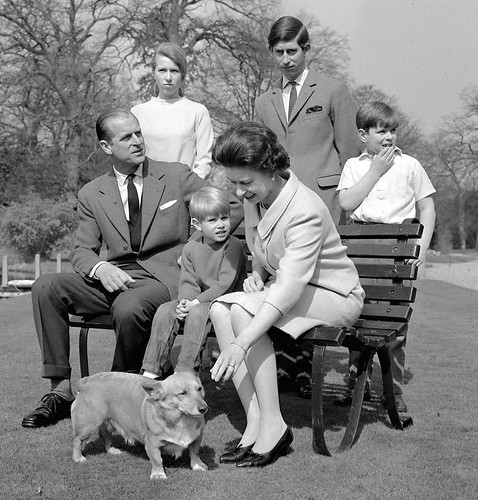
William and Catherine have made an addition to their little family - a black cocker spaniel puppy. By choosing a dog, they are following a royal tradition. Dogs have long been associated with members of the royal family. The Queen favours corgis and breeds Labradors, but the types of dogs owned over the years vary by the individual. Some have been adopted and some have been received as gifts. Here is a brief history of royals and their favorite pets.


Princess Victoria with her spaniel, Dash
via Wikipedia
Over the course of her long life, Queen Victoria owned several breeds - terriers, collies, dachshunds, greyhounds and Tibetan Mastiff. When Queen Victoria was presented with a Pekingese, he was the first of his breed to arrive in Britain. She also owned pugs - a favorite of her great-grandson, the Duke of Windsor. Her dogs were commemorated in paintings, photographs, and when they died, statues to mark their graves. One of the last dogs she owned, a Pomeranian named Turi, was at her side when she died in 1901.

Marble effigy of Caesar
Image from the
St George's Chapel website
King Edward VII was partial to terriers and his favorite was an Irish terrier named Jack. He admired Jack's independence and disdain for others. In 1903 Jack died during a trip to Ireland with the King and Queen. After Jack's death the king kept a locket containing strands of the terrier's hair on his writing desk.

Shortly after Jack's death, the King was presented with a fox terrier called Caesar, who accompanied his master everywhere. In 1907 the King he commissioned Faberge to create a group of small carved animals, including one of Caesar. The miniature features ruby eyes and a gold collar that reads 'I am Caesar. I belong to the King'. After the king's death in 1910 he gained fame as part of the king's funeral procession, walking behind the late king's favorite horse. As a result of his notoriety, Where's Master? a book supposedly written by Caesar, was published in June 1910 . He died in 1914 and is buried in the grounds of Marlborough house. In 1927 an effigy of him was included on the tombs of the King and Queen Alexandra in St George's Chapel. He lies curled up at the foot of his master.

King George V owned five dogs, the first was a collie called Heather. After Heather died, the King adopted Happy, the first of four terriers he would own. Like Caesar, he wrote his own book If I were King George, which was published in 1911.

The Royal Family in the gardens of Frogmore House in 1968
The Royal family in 1968
via British Monarchy flickr
His son, King George VI, owned several Labrador Retrievers, and bred yellow Labradors. He introduced the corgi to the royal family in 1933 when he bought one named Dookie from a local kennel. At present, the Queen owns three Corgis: Monty, Willow and Holly and three Dorgis: Cider, Candy and Vulcan.  On her eighteenth birthday, Princess Elizabeth was given a corgi named Susan, who accompanied her on honeymoon in 1947. Some of the royal corgis have mated with daschunds, resulting in the 'Dorgi' breed. The Queen is one of the longest-established breeders of Pembroke corgis in the world.

The Duchess of Cornwall is patron of several organizations for animals. She owns three Jack Russell terriers, Tosca, Rosie and in August 2011 she adopted another named Beth from the Battersea Dogs and Cats home.

© Marilyn Braun 2012

Thank you for enjoying this article. If you use the information for research purposes, a link to credit the work I've put into writing it would be appreciated.

Sources:

Noble Hounds and Dear Companions: The Royal Photograph Collection

The Official site of the British Monarchy

Tuesday, September 13, 2011

Royal Fashionistas

In honor of New York Fashion Week and the relentless focus on Kate's clothing, I thought I would go  back and revisit some other royals who were quite the fashionistas in their day. Think Kate put the royal family on the fashion map? Au contraire!

No fashion list would be complete without Queen Victoria. She rocked the black dress well before Audrey Hepburn was a glimmer in her parent's eyes. Thankfully she did not pioneer the little black dress (shudder) but she was a true champion when it came to wearing black from head to toe. Pairing it with accessories, such as priceless jewels, a white veil and a ceremonial sash, no royal has ever done the color justice since.

Albert Edward,
The Prince of Wales
While he would later lend his name to an entire era, the future King Edward VII was once a mere babe in a formal portrait.  In this Winterhalter painting, the young prince wears a sailor suit. His mother Queen Victoria was so enchanted with the suits worn by sailors in the Royal Navy that she commissioned a scaled down version for her son, thus setting a fashion trend. It is somewhat ironic that Edward himself did not serve in the Royal Navy, unlike his sons. The original suit is preserved in the National Maritime Museum in Greenwich.


No other royal could be credited with popularizing a physical disability. Just before the birth of her third child in 1867  Princess Alexandra, Princess of Wales, contracted rheumatic fever, which left her with a permanent limp. This started a trend amongst society ladies called the 'Alexandra limp'. Which just goes to prove that the tradition of sycophancy never goes out of style.


Edward, Prince of Wales, was the royal superstar of his day. The man who popularized patterned Fair Isle sweaters, the Windsor Knot (but did not invent it) reportedly owed his boyish figure to spanx. He favored plus-fours, loud check tweeds, as well as two-tone shoes. Chaffing against royal fashion constraints, one of his first acts upon becoming king was to banish the frock-coat from his court. 

The Princess Royal may not be renowned for her fashion sense but well before Kate was recycling her clothes, there was Anne. Case in point, at the 2008 wedding of Lady Rose Windsor, daughter of the Duke of Gloucester, Anne wore a dress older than the groom. The Maureen Baker dress had been worn at Charles and Diana's wedding 27 years earlier. Anne paired the outfit with the same John Boyd hat and it appears the same earrings. Instead of being criticized she was praised not only for her economy, but for still having the figure to fit into a dress at the age of 58 that she originally wore when she was 31.

© Marilyn Braun 2011

Thank you for enjoying this article. If you use the information for research purposes, a link to credit the work I've put into writing it would be appreciated.
Friday, August 19, 2011

Royal Souvenirs and Collectibles

Royal Weddings, Births, Deaths, Coronations, Jubilees all inspire new souvenirs and collectibles. From books, to china, figurines, glassware, clothing, you name it. But what are souvenir items. They are, of course a way of making money, but at one point they were also used as a way of showing support for the monarchy. This is very evident in items relating to Jubilees; the earliest known English commemorative items date from the restoration of King Charles II in 1660.
 
The tradition of selling commemorative items to mark special royal occasions didn’t really catch on until Queen Victoria’s Golden Jubilee. Because very few of the people even knew what the Queen looked like, items adorning her likeness became very popular and started a tradition. Royal events past and present have been marked by coins, stamps and ceramics, glassware to name a few. With the arrival of new manufacturing methods in the last 250 years, commemorative items are now more affordable to the general public.
 
In the last few years there have even been some recent auctions of undergarments owned by Queen Victoria. In 2008, a pair of Queen Victoria's monogrammed cotton underwear dating from the 1890s, sold for £4,500 at an auction in Derby, attracting bids from Brazil, Russia, Hong Kong and New York. At the same auction, a chemise sold for £3,800, while one of Queen Victoria's nightdresses sold for £5,200 to an American collector. These items are considered valuable because they are so rare. One of the most valuable pieces of royal memorabilia is a Meissen teapot decorated with the coat of arms of Sophie of Hanover, the mother of King George I, which dates from 1713-14, is considered the earliest surviving date-able piece of Meissen porcelain, and has an estimated value of £200,000-£300,000. A few years back someone was trying to sell letters Prince Charles had written for 20 or $30,000 on eBay. Not including shipping.

Having royal items fetch these prices is the exception rather than the rule. The sheer volume of memorabilia means that so much of what is made has little to no resale value. So much so that you have to go back to Queen Victoria taking the throne in 1837 to find objects that have increased in value.

 In the case of William and Kate’s wedding the range of items has increased. After all it is big business, to the tune of £40m. The items are eclectic - some traditional are traditional, like china, others are unusual and imaginative, such as souvenir condoms. There’s also replica engagement rings, salt and pepper shakers, life sized cutouts, nail polish, beer, pies, coins, stamps, the list is endless.

The Royal family may have rejected approval for t-shirts, towels and aprons but this doesn’t stop people from producing items. Buckingham Palace has issued rules on what souvenir manufacturers can produce in terms of William and Kate wedding merchandise. Items must be permanent and significant – tea towels, t-shirts and aprons are out, whereas mugs, china plates and biscuit jars are in. While this may be the official rule, manufacturers still tried to get in on the act. The Royal Family doesn’t trademark itself, so anyone is free to produce merchandise bearing their names or likenesses, which means there is no real distinction between licensed and unlicensed merchandise – an important distinction in the world of collecting. Many of these items produced will be sold in the thousands, and thus not hold any long term value.

Not to say that modern items are completely worthless. Royal items designed by Eric Rav-il-ilous are collectible. One sold last year for close to £2,000. The ugly and the unusual also tend to sell better. Maybe it’s worth taking a look at that Royal Mint coin that looks nothing like William and Kate?

There are some things that might have a good chance of holding their value:

Official china – mugs, tankards, plates, pill boxes. For fine bone china, there are items from the Aynsley collection. Including a hand-painted highly sought after 4 piece set including an engagement plate, loving cup with two handles, tankard mug and coaster. Though they are currently affordable, they’re likely to go up in price as the supply dwindles.

Commemorative coins are another good investment when it comes to Royal wedding memorabilia. They will be embossed with the important dates and will increase in value over the years to come especially if they are made from silver or gold or are part of a limited edition run.

Stamps are a very popular item and because the various Commonwealth countries will produce their own, there will be a lot to choose from.

Some pointers for collecting:

  • Don’t buy anything that is not of a high quality. Protect your investment by buying from a reputable company.
  • Try and acquire an extensive and themed collection.
  • Ensure you store your collection well to keep it in mint condition. Keep anything boxed or packaged as is.
  • Look out for fine bone china pieces as they hold their value. High quality china as well as hand painted versions are the ones to collect – see the Aynsley collection above.
  • Cups and mugs with portraits of the Duke and Duchess of Cambridge are likely to become collectors pieces.
  • Commemorative plates are another good option and will be available both before and long after the wedding to mark such events as anniversaries or the birth of their children. Those with portraits of the couple will be the most desirable.
  • Portraits are the key to the future popularity of an item.

Having said this, any increase in value is not likely to be seen for another 30-40 years, so just hope that your children and grandchildren will appreciate these items as much as you do having taken the time and care to collect them.

And even if they do not retain their value, one of the best quotes is on the British Royal Family website: it is the meaning and memories associated with the souvenirs which give them their value.

© Marilyn Braun 2011 Thank you for enjoying this article.

If you use the information for research purposes, a link to credit the work I've put into writing it would be appreciated.

Tuesday, September 21, 2010

Question: The Christening of Victoria, The Princess Royal Painting

My grandfather has a beautiful painting of Queen' Victoria's christening (1841) and born in 1840. I am trying to find a list of people who attended the event so I can pin point who is in the painting.
Royal Collection Trust / © Her Majesty Queen Elizabeth II 2016

The painting that your grandfather has is a reproduction of a work called The Christening of Victoria, The Princess Royal by Charles Robert Leslie. The original, an oil on canvas measuring 129.5 x 182.9 cm, is in The Royal Collection.

The Princess, who was born on November 21, 1840, was christened on her parent's first wedding anniversary, February 10, 1841. The christening robe that she wears is made from Honiton lace and white satin and was worn by all royal babies until 2008, when it was retired due to its age and fragile state. The baptismal lily font was commissioned by Queen Victoria. Made of Silver gilt, and measuring by height 43 cm; and diameter 43 cm, it is one of only two silver English fonts. The font is in the shape of a water lily, supporting a large shell. Inside the rim of the small shell were water lilies floating around the edge and water was specially brought from the River Jordan. The lilies were considered to represent purity and water lilies were associated with new life. This font has been used at all royal christenings since 1841.

Princess Victoria was christened in the Throne Room at Buckingham Palace by William Howley, Archbishop of Canterbury. Her godparents were Leopold, King of the Belgians, Ernst I (her paternal grandfather), he was not present during the event and the Duke of Wellington stood proxy. The other godparents were Prince Augustus, Duke of Sussex (her great-uncle), Dowager Queen Adelaide, widow of King William IV, the Duchess of Gloucester (her great-aunt), and the Duchess of Kent (her grandmother).

The painting commemorating the event depicts, The Dowager Queen Adelaide on the left of the font, who named the child Victoria Adelaide Mary Louisa. Others in the painting include the Duchesses of Gloucester and Kent, King Leopold I of the Belgians, and the Duke of Sussex (all in the group on the left). Queen Victoria and Prince Albert are on the right of the font.
© Marilyn Braun 2010

Wednesday, July 14, 2010

Royal Focus: The Prince Albert Brooch

401511 18: Britains Queen Elizabeth II smiles at the crowds of well wishers lining the Waitemata Plaza walkway February 26, 2002 in Auckland, New Zealand. The Queen and her husband the Duke of Edinburgh are in New Zealand for six days before travelling to Australia on February 27. (Photo by Dean Treml/Getty Images)

This large oblong sapphire is surrounded by twelve round diamonds. It was given to Queen Victoria by Prince Albert of Saxe-Coburg-Gotha the day before their wedding. For their wedding she wore the brooch with a diamond necklace and earrings and always referred to the jewel as 'Albert's brooch'.

While Prince Albert was alive, Queen Victoria wore it constantly and inexpensive reproductions of it were made for those subjects who wanted to purchase a version of the brooch.  After his death in 1861 she rarely wore it. In her she instructed that it be considered a Crown piece of jewellery, held in trust for all future Queen consorts. Queen Alexandra wore it pinned to her shoulder for her coronation in 1902. Queen Mary wore it often, but Queen Elizabeth, the Queen Mother was rarely seen wearing it. The brooch is a favorite of the present Queen. Prince Albert made copies of the brooch for his daughters and the present Queen gave one of these to her daughter, Princess Anne.

© Marilyn Braun 2010

Sunday, March 07, 2010

The Royal Report for Sunday March 7, 2010 - Royal Fashions

What do King Edward VII, Queen Alexandra, King Edward VIII, Princess Margaret and Princess Diana have in common? They set fashion trends.

Find out about these leaders of royal fashion by listening to this episode

Publications mentioned

Hello! Canada Weekly No 164 8 March 2010

Majesty Magazine January 2010 Vol 31 No 1

From my royal collection

Royal Style Wars - The trend setting fashion feud between the Princess of Wales and the Duchess of York by Lesley Ebbetts

Resources used to research this episode

Diana The Fashion Princess Davina Hanmer & Tim Graham

Royalty in Vogue by Josephine Ross

The Princess of Wales Fashion Handbook by Sue James

Princess Diana's Maternity Fashion and Nursery Handbook by Sue James

A Family Album by The Duke of Windsor

Diana Style by Colin McDowell

The Windsor Style by Suzy Menkes

Tune in live to the next episode of The Royal Report on Sunday March 14, 2010 at 9:00PM EST (North America)

The topic will be: Royal Jewels

© Marilyn Braun 2010

Friday, February 05, 2010

Sunday, December 13, 2009

Royal Review: The Young Victoria

I'll admit. Were it not for Sarah Ferguson's, (Duchess of York) involvement in this film I would have more than likely dismissed it as just another straight to DVD royal movie. Nice to eventually loan from the library but not something I would rush out to see otherwise.

However, with Sarah Ferguson's involvement I was somewhat intrigued by the idea. When I think of Queen Victoria I think of her later in life: the mournful, unsmiling, imposing, matriarch of a large extended inter-married royal family. I don't think of her as young, passionate and inexperienced. I also don't think of her as beautiful when portraits of her were said to be far more flattering than what she actually looked like in person.

Covering the period of her early teens and touching on the death of Prince Albert (sorry if I've given away the ending) The Young Victoria shows a princess under the thumb of her mother and advisor Sir John Conroy who want Victoria to sign a regency on her sickbed to put her mother in charge and Conroy the power behind the throne. However, Victoria is no docile princess. She is spirited and defiant and once she becomes Queen, Conroy and her mother are immediately jettisoned from her court.

But they're not the only ones with an agenda as politicians dismiss Victoria as too young and inexperienced, and Lord Melborne portraying himself as her protector and confidant. Then there's the King of the Belgians desire to infiltrate the court via his nephew, Prince Albert of Saxe-Coburg-Gotha. Yet while Prince Albert initially does what's required of him, no one predicted that the new Queen and Prince Albert would actually develop feelings for each other. This makes those with agendas jealous, especially when the couple's loyalty to one another excludes them.

Although they are passionate, they are not without their disagreements. As Prince Albert struggles to find a meaningful role, Victoria becomes threatened by any interference to her power. After this fight, the couple go for a carriage ride and an assassination attempt is made on Victoria. Albert shields her with his body and is shot, suffering grievous injuries. He survives and Victoria realizes how important Albert is to her and gives him a more important role, illustrated by moving his desk next to hers and jettisoning her longtime servant and confidant, Baroness Lehzen.

Emily Blunt, (The Devil Wears Prada) portrays Queen Victoria in the bloom of her youth, as human and passionate - two qualities you wouldn't normally associate with her. Prince Albert is portrayed by the handsome Rupert Friend. Like Victoria, his looks may not be historically accurate, but using such photogenic actors makes their passion much more convincing. Mark Strong plays the glowering Sir John Conroy, Jim Broadbent is wonderful, hamming it up as Victoria's uncle, King William IV, Paul Bettany plays the charming, paternal and influential Lord Melborne and Victoria's great-great-great-great granddaughter Princess Beatrice has a minor cameo during the coronation scene.

Ultimately this film offers no great revelations but it's enjoyable and a good movie to watch if you'd like to see a side of Queen Victoria that most of us may be unfamiliar with.

© Marilyn Braun 2009

Wednesday, May 27, 2009

Royal Review - Royal Weddings by Friederike Haedecke and Julia Melchior

While there are many books on royal weddings, Royal Weddings by Friederike Haedecke and Julia Melchior is different. Looking at the cover with the famous photo of Diana on her wedding day, you could be forgiven for thinking of this as just another book focusing on British royal weddings. But such a nod and cover photo is necessary, if only because Diana is the most globally recognizable. Aside from Princess Grace of Monaco, the other brides may be completely foreign to those outside of their respective countries. But the cover is also somewhat misleading. Those expecting a book about Diana or other British royal brides are in for a surprise. This is no ordinary book on the subject.


Of the fourteen weddings, this book starts off with the most controversial one: Prince Haakon of Norway to Mette-Marit Tjessem Hoiby. For those who are not familiar with this story, prior to her wedding Mette-Marit was a single mother with an illegitimate child. Not your typical Cinderella. Despite the schmaltzy chapter title: Victory of Love, their relationship and wedding is covered in a way it would be for any other royal wedding. The couples are presented as real people in remarkable settings, sharing their special day with the rest of the world.

This book is beautiful, with full page color photos. The couples and their weddings are presented as real people, in remarkable settings, sharing their special day. There are some interesting bits of trivia: Princess Mary of Denmark's bridal bouquet was placed on her mother's grave in Scotland. Queen Silvia of Sweden's handkerchief was attached to her wrist with a rubber band. Not to mention the 44 pound wedding dress of Soraya Esfandiary, second wife of the Shah of Iran.

The weddings are grouped together, Scandinavian (Norway, Sweden and Denmark), Greek, Spanish, Monaco, British and Dutch. Those of Japan, Iran and Brunei stand out and make interesting inclusions if only to see how royal weddings are celebrated outside of European traditions. While the focus is very much on the current royal couples, there are some weddings from previous generations such as Queen Beatrix and Prince Claus, Princess Sophia of Greece and Don Juan Carlos of Spain, Queen Elizabeth II & Prince Philip. The oldest wedding is that of Queen Victoria and Prince Albert but the inclusion of Charles and Diana is somewhat predictable. However it's the weddings we only get a glimpse of that could have been very interesting additions, such the current King and Queen of Norway or even Queen Margarethe and Prince Henrik of Denmark.

Were it not for this book the details of these weddings, such as the wedding dress designer, locations of ceremony, guests, royal traditions, would otherwise be lost to the sands of time. Now the information is compiled in one place. The book is well researched but mentioning that Queen Victoria was 5'8" is questionable when most sources list her at 5 feet. Otherwise the book is a treat for the eyes and for those who love the ultimate in royal pageantry.

© Marilyn Braun 2009

Tuesday, November 18, 2008

Question: Queen Victoria's Wedding Dress and Bouquet

Could you tell me more about Queen Victoria's wedding dress and bouquet?
Thank you very much for your question.

On her wedding day Queen Victoria wore a shoulder-free white satin court dress. The bodice had a low, round neck and edging the neckline were narrow rows of piping and the short, full sleeves gathered into double puffs. The fullness of the skirt was taken in at the waist in a series of deep forward-facing pleats. The skirt had a deep panel of Honiton lace at the front, chosen by Victoria to support the declining lace trade. A court train, made of the same silk satin, measured 6 years in length and had a border of orange blossom sprays matching the coronet of orange blossoms from which her veil was suspended. The choice of orange blossom is significant and somewhat prophetic. In the Mediterranean, it was a symbol of fertility; Queen Victoria would later have nine children. In China it was an emblem of purity, innocence, and chastity; bywords for the Victorian era.

Queen Victoria wanted her entire ensemble to be made of materials of British manufacture. Probably the most well known aspect of her dress is the honiton lace used for her veil and for the flounce. The design of the lace is attributed to Wiliam Dyce and a colleague at the Government School of Design in London. It took more than one hundred lace makers six months to make the exquisite lace and the pattern was destroyed so that it could never be copied. Of her five daughters only her youngest, Princess Beatrice, would get to wear it on her wedding day in 1885. The veil was amongst Queen Victoria's most prized possessions and she would eventually be buried with it.

Because her gown and veil were all in white, she is credited with helping to establish a custom of wearing white, which continues to this day. Previously royal brides had worn gold and silver colors in order to express their wealth. Commoners often wore dark colors in order to use their gowns for other special days. It is said that the simplicity of her dress would set a pattern for other royal wedding dresses - although looking at some of the wedding dresses that followed, I would disagree with that. Many royal wedding dresses have been quite elaborate with beautiful embroidery - hardly simple at all. If anything it would be 120 years later that simplicity would return with Princess Margaret's dress in 1960.

As for her bouquet, Queen Victoria carried a small posy made up solely of snowdrops (Prince Albert's favorite flower). It's somewhat unfortunate but I can only find one source for this information. In reference to bridal bouquets, there is a royal wedding tradition of brides including a sprig of myrtle in their bouquets. This bush was grown from a cutting brought from Coburg by Prince Albert. Sprigs have been included in the bouquets of all royal brides since the 1850s.

© Marilyn Braun 2008

Thank you for enjoying this article. If you use the information for research purposes, a link to credit the work I've put into writing it would be appreciated.

Sources:

Royal Wedding Dresses by Nigel Arch and Joanna Marschner. A Historic Royal Palaces publication.

Royal Weddings by Friederike Haedecke and Julia Melchior

Legendary Brides by Letita Baldrige

I Do: 100 Years of Wedding Fashion by Caroline Cox
Britain's Royal Brides by Josy Argy and Wendy Riches

Five Gold Rings - A Royal Wedding Souvenir Album - by Jane Roberts for Royal Collection Publications

Two Centuries of Royal Weddings by Christopher Warwick

Related Articles

Royal Weddings
Royal Wedding Dresses
Question: Princess Diana's Wedding Bouquet

© Marilyn Braun 2008

Thursday, April 26, 2007

Question: Why isn't the Duke of Edinburgh Prince Consort?

I recently received this question:

Can you blog us anything about "Prince Consort?" I take it this will be a big honor for Prince Philip since no one has held this title since Prince Albert...why has it taken the Queen this many years to bestow it?

Thanks very much for your question!

If you pay attention to recent royal news reports, you might have read that Queen Elizabeth II might/may/will make her husband Prince Consort on/around their 60th wedding anniversary on November 20th, 2007.

Should she do so, the Duke of Edinburgh, would become only the second male consort to hold the title, which carries with it no benefits or extra duties, but probably looks nice on business cards. Currently, there is only one Prince Consort, and that is the husband of Queen Margarethe of Denmark.

Such titles aren't always bestowed right away. Prince Henrik, Queen Margarethe's husband, became Prince Consort 33 years after her accession to the throne. Queen Victoria conferred the title of Prince Consort upon her husband Prince Albert in 1857, 17 years after their marriage. Queen Victoria's consort, Prince Albert, was the first male consort in the British royal family to hold the title.

The Duke of Edinburgh will be 86 in June of this year. In November he will have been married to the Queen for 60 years. He has been her consort since February 1952. In September 1952, the Queen granted her husband precedence next to herself and on February 22nd, 1957 she created him a Prince of the United Kingdom and his title then became HRH The Prince Philip, Duke of Edinburgh.

According to the official site:

Prince Philip chose not to take on the title of 'Prince Consort', and to continue to be known instead as 'The Duke of Edinburgh'. He still offers the support and undertakes the duties expected of a consort and was the first person to pay homage to The Queen following her Coronation, by kneeling at her feet and then kissing her cheek.

The Prince has served Her Majesty without any such title and, whether she choses to make him Prince Consort after all of this time, really makes no difference. Title or none, his duty to her is unquestioned.

© Marilyn Braun 2007

Tuesday, February 20, 2007

My Favorite Royal Books

I have an extensive collection of books on the royal family. One look at my bookcases, floors and and bedside table, you will note that my tastes are anything but highbrow. I prefer informative, easy to understand books with nice pictures. So, to prove this point, I thought I would compile a short list of my favorite books. As a helpful aside, you can click on the titles to order them.

The Royal encyclopediaThe authoritative book of the Royal Family - Edited by Ronald Allison and Sarah Riddell. Sometimes the word for word source for Wikipedia articles this A to Z book covers Abbey Court, Holyroodhouse to Zoological Gardens, Regent Park and everything in between. 632 pages of royal information, no royal collection is complete without it. If you don't have it, then too bad for you. So rare, I can't even locate a picture of it. Suffice to say that it's heavy, has the title in gold letters and a nice close up of the Imperial State Crown. Some would say it's wine colored...Merlot?..Bordeaux?..oh never mind.


Queen Victoria's Family: A Century of Photographs by Charlotte Zeepvat. I love old photos and this book is chock-full of them. I'm surprised my copy isn't dog eared for all of the time I've..uhh..spent "reading" it. For me, one very interesting aspect of this book is watching various descendants grow from babies to old age.


The Complete Idiot's Guide to British Royalty A good standby, this book has rescued me from many a confused look when someone asks me a serious question about the relevance of the royal family and what they actually do. Hopefully the recently published The British Monarchy For Dummies will fill in any blanks and cover me in all awkward situations.
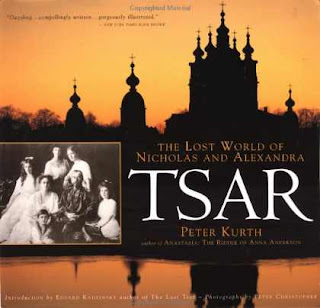

Tsar: The Lost World of Nicholas and Alexandraby Peter Kurth. Beyond the connection to the Brit's, the Russian royal family is not my forte. This book has beautiful pictures of the various palaces, and the royal family before it all went horribly wrong. The last chapter details the discovery of the Romanov remains and the process to authenticate them. It also has a modern day section on DNA analysis and attempts to answer the question: Was Anna Anderson the Grand Duchess Anastasia?


The Jewels of Queen Elizabeth II: Her Personal Collection by Leslie Field.This is one of my all-time favorite books. Authorized by Buckingham Palace it details the collection of Her Majesty The Queen. Broken down by type of stone, it has gorgeous photos of tiaras, brooches, necklaces, bracelets, along with the history behind these pieces.

Queen Elizabeth II: A Celebration of Her Majesty's Fifty-Year Reign
by Tim Graham. Released to coincide with the Golden Jubilee celebrations. Want to know where the Queen gets her shoes, hats, and coats made? Information on the endless round of engagements the Queen performs? How the Garden Parties are organized? Released in 2002 to coincide with the Golden Jubilee celebrations, this wonderful book tells you about this and much much more!

I could list many many more, but that's another article!

© Marilyn Braun 2007

Tuesday, April 26, 2005

Jewels fit for a Queen

Jewels are a pivotal part of any royal woman's wardrobe. The Queen’s jewels might go unnoticed but they are beautiful and fascinating for their history and individual craftsmanship. Over the years the Queen has received a number of gifts, whether personal ones or jewels from heads of state and if she is receives a piece of jewellery she will usually try to wear it to the next occasion as a compliment to the presenter. In public or private, it would be very unusual to see the Queen without some sort of brooch or her pearls. In the evenings she can be seen with some type of royal parure, which is a set of matched jewellery usually comprising of a brooch, earrings, tiara and necklace. The Queen is estimated to have in her collection 14 tiaras, 37 pairs of earrings, 105 brooches, 58 necklaces, 37 bracelets, six pendants, 14 watches, and 15 rings.

Some of the jewels are family heirlooms or belong to the Crown to be worn by future queens. Although there are no official guidelines, jewels which are personal property, are bequeathed at the owner's discretion. Queen Victoria and Queen Mary are in large responsible for organizing the collection, deciding which ones would be personal gifts and which ones would belong to the Crown. Regardless of what public event the Queen attends she is usually wearing something on her head, whether it is a tiara, crown, or hat, as a symbol of authority. It would be impossible to mention all of her jewellery so I will confine this article to the more familiar pieces, mainly tiaras.

When most people think of royal jewels they think of the Crown Regalia, specifically the Imperial State Crown, it is most recognizable as it is worn for coronations and state openings of parliament. This crown weighs 2lbs 13 oz. It is set with 2,873 diamonds, 273 pearls, seventeen sapphires, eleven emeralds and five rubies. The Crown also features the 317.4 Cullinan II diamond and the ‘Black Prince’s ruby’. In its long history at one point the crown was transported by cab and until 1962 it was transported to the Houses of Parliament in a closed carriage. Now it is openly displayed for the waiting crowds, as a prelude to the symbolism and pageantry as the Queen carries out her role as constitutional monarch. When the Queen meets children in public at least one of them is invariably bound to ask her "Where is your crown?"

King George IV State Diadem

The most frequently worn part of the Crown Regalia is the King George IV State Diadem. It is completely circular and decorated with symbolic roses, shamrock and thistle. Originally made for King George IV in 1821 for his coronation, but he never wore it. During the Hanoverian period, gems were hired out for the crowns and then stripped bare leaving skeletal frames between each coronation. In1838 the diadem was reset with jewels from the royal collection and Queen Victoria wore it at her coronation. However, with the beginning of this reign the jewels were soldered in, symbolic of the new solidity and prosperity Queen Victoria would come to represent. She wore the diadem constantly for family events, state banquets, formal portraits, and she is pictured wearing it in the first postage stamp issued in 1840. In her will she left it to the Crown. The diadem was a particular favourite of Queen Alexandra.

The present Queen wore this on her way to her coronation and wears this to and from the State Opening of Parliament each year. She is pictured wearing it on all UK postage stamps and the diadem is no doubt seen by more millions of people than any other item of royal jewellery.

Girls of Great Britain and Ireland tiara

If one looks at photos of the Queen during evening events, you will frequently see the‘Girls of Great Britain and Ireland’ tiara. The tiara gets its name from donations made to a committee formed in 1893 to raise money for a wedding gift to the future Queen Mary. It has diamond festoons, scrolls and 27 collet spikes and Queen Mary originally wore it with upstanding pearl spikes. Minus the pearls, she gifted it to Princess Elizabeth for her wedding in 1947. It was her first tiara and the Queen affectionately calls it ‘Granny’s tiara’. This tiara has also appeared on currency and stamps.

King George III fringe tiara

Princess Elizabeth did not wear 'Granny's tiara' on her wedding day; instead she borrowed the King George III fringe tiara from her mother. A graduated circle of vertical rows of diamonds, it was originally made in 1830 and designed to be worn as either a necklace or a tiara. This tiara/necklace was one of the pieces that Queen Victoria left to the Crown. An interesting story about this tiara is that as the princess was preparing for her wedding the frame of the tiara snapped in half. A royal jeweller was on standby and repaired it in time for her departure. However had it not been fixed, unlike ordinary brides the princess had other tiaras to borrow from the royal collection if necessary. Princess Anne also wore this tiara on her wedding day.

The Cambridge Lover’s Knot Tiara

Next to the Spencer family tiara, the Lover's Knot tiara is currently most associated with Diana, Princess of Wales. As such we are not likely to see another royal lady wearing it anytime soon, which is unfortunate as I think it's the most beautiful of all of the royal tiaras. Queen Mary commissioned it in 1914 as a copy of one owned by her grandmother. Like "Granny's tiara' this also had upstanding pearl spikes at one point. In the 19th century it was a popular design and there are five known versions still in existence. Queen Mary left this tiara to the present Queen and she wore it occasionally as a young woman, eventually gifting it to Diana for her wedding in 1981.

The Grand Duchess Vladimir tiara

Another of the Queen's familiar tiaras is the 'Grand Duchess Vladimir' and like 'Granny's tiara' this is the Queen's personal property. In 1921 Queen Mary bought this tiara from some the Grand Duchess’ children and in 1953 left it in her will to the present Queen. Originally made in 1890, it has fifteen interlaced circles with a swinging oriental pearl suspended from each. The tiara is also very versatile as the pearls can be interchanged with emerald drops. The emeralds for this tiara are part of a parure consisting of matching necklace, brooch, stomacher, earrings and two bracelets.

For more detailed information on the royal jewels, please check out the books listed below.

References:

The Queen’s Jewels – The Personal Collection of Elizabeth II by Leslie Field
The Royal Jewels by Suzy Menkes
Queens Jewels by Vincent Meylan
Hello Magazine No. 863. 21 April 2005

© Marilyn Braun 2005


Thank you for enjoying this article. If you use the information for research purposes, a link to credit the work I've put into writing it would be appreciated.